Let’s cut through the hype about aerated concrete block (ACB) packaging lines. If you’ve ever shopped for packaging equipment for your ACB plant, you’ve probably seen numbers thrown around—“99.9% accuracy!” “Zero errors guaranteed!”—and wondered how much of that is real, and how much is just marketing fluff. As someone who’s spent the last 12 years designing, building, and supporting ACB packaging lines for plants across North America and Europe, I get it. You don’t just want a shiny spec sheet; you want to know what packaging accuracy actually means for your operation, how our lines stack up, and why it’s one of the most important metrics you’ll ever measure for your bottom line. Aerated Concrete Block Packaging Line
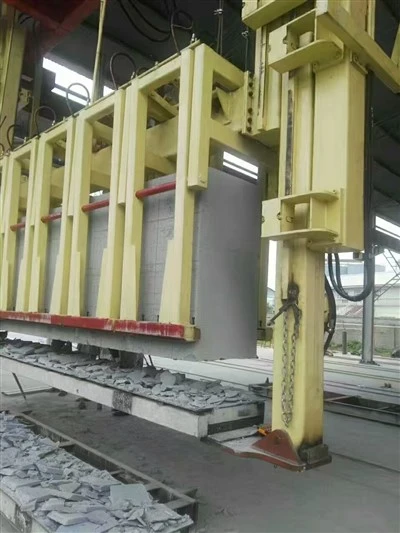
First, let’s get one thing straight: packaging accuracy isn’t just about counting blocks. I talk to plant managers every week who think it’s as simple as “does the line put 50 blocks on a pallet?” But that’s only half the story. For ACB producers, packaging accuracy covers three core areas that directly hit your profit margin and customer satisfaction: count accuracy (the number of blocks per load), dimension accuracy (so pallets fit through your warehouse racks and transport trailers), and weight accuracy (critical for compliance with shipping regulations and avoiding costly surcharges). Mess up any of these, and you’re eating costs you didn’t budget for.
Let’s start with count accuracy, because that’s the one most people fixate on. ACB blocks are lightweight, porous, and prone to shifting—more so than traditional concrete blocks, which means automated packaging lines have to handle them with care to avoid missing or double-counting units. Early in my career, I worked with a plant that had a cheap, off-the-shelf packaging line that was only hitting 96.2% count accuracy. What did that mean for them? They’d ship a truckload of blocks that was supposed to have 1,200 units, but was actually 1,155. Their customer caught it at the job site, charged them a 10% short shipment penalty, and then the next month, when they undercounted 45 units on another load, they had to send a 2-person team to the job site to hand-deliver the missing blocks at 7 a.m. on a Saturday. That one mistake cost them over $12,000 in penalties, rush labor, and lost customer trust.
Our standard ACB packaging lines hit 99.85% count accuracy, on average. How do we get that, when so many cheaper lines can’t? It starts with the sensor technology we use, not the flimsy photoelectric eyes that most off-the-shelf lines rely on. We deploy high-resolution, near-infrared (NIR) sensors that can distinguish between individual ACB blocks even when they’re slightly tilted or overlapping—something regular cameras can’t do consistently. We also add in two cross-checks: first, after the blocks are stacked, the sensors do a full sweep of the layer to confirm every unit is present, then we add a secondary check with a linear encoder that tracks the movement of the conveyor and counts the number of blocks that have passed through the line. No single sensor is 100% perfect, but the combination of three independent checks eliminates the gaps that cause undercounts or overcounts. That 99.85% number isn’t a theoretical spec we pulled out of thin air either—we test every line before it ships, and we average data from 18 plants we’ve installed in the last three years. The lowest accuracy we’ve seen from any of our lines is 99.72%, and the highest is 99.94%.
Next is dimension accuracy, and this is the one that sneaks up on plants. ACB is sold as pre-cut blocks—standard sizes are 600mm long, 200mm wide, and either 100, 150, 200, or 250mm thick. When you stack them on a pallet, the total dimensions of the load have to be within strict limits: most palletized loads for ACB are required to be 1,200mm wide (standard pallet width) and 2,400mm long, with height varying by block thickness. If one layer of blocks is 2mm too wide, over 10 layers, that adds up to 20mm, and now your pallet won’t fit through a standard warehouse rack. If the load is 50mm too long, you can’t fit 10 pallets on a 12.2m trailer, which means you’re losing one pallet per load on every shipment, adding thousands of dollars in extra shipping costs every month.
Our lines’ dimension accuracy is ±1mm for individual blocks and ±2mm for full pallet loads. How do we nail that? We have adjustable side guides that use servo motors, not the fixed hydraulic guides that wear out and slip over time. The servo guides learn the exact dimensions of each block type during setup, so if a plant switches between 100mm and 200mm thick blocks, the guides adjust automatically to keep alignment tight. We also add a laser dimension scanner at the end of the line that verifies the width, length, and height of every pallet before it’s wrapped. If it’s even 1mm over the limit, the line pauses and alerts the operator, so they can adjust before the pallet moves on. I remember one plant manager who switched to our line after spending three months dealing with loads that got rejected at the transport yard. He told us he was losing $1,800 per load before switching, because he could only fit 9 pallets instead of 10. With our dimension accuracy, he’s now fitting 10 pallets every time, and that extra $1,800 per load has gone straight to his bottom line.
The third pillar is weight accuracy, and this is non-negotiable for shipping compliance. Most regions have strict weight limits for road transport—for example, in the U.S., a standard semi-truck can carry a maximum of 36,287 kg (80,000 lbs) total. If you overload the truck, you get a heavy fine, often $500 or more per overweight violation. If you underload, you’re wasting space that you’re paying for, which means you’re making fewer shipments and higher per-unit costs. ACB blocks have slight variations in density, even from the same batch, so a line that doesn’t track weight accurately can easily end up with loads that are 100kg over or under the target.
Our lines integrate high-precision load cells that measure the weight of every layer of blocks as it’s stacked, then calculate the total pallet weight. We program in the target weight per load, and if the total is even 0.5% over or under, the line either removes a block or adds a spacer to adjust. That 0.5% tolerance is critical—most regulatory bodies allow a ±1% variance for shipping, but why risk a $1,000 fine when you can hit 0.5% accuracy consistently? One of our clients in Ontario, Canada, had been using a line with basic load cells that only checked total pallet weight, not per layer. They were getting fines about twice a month, averaging $750 each, so $18,000 a year. After switching to our lines, they’ve only had one minor weight variance in two years, and that was due to a calibration error that our service team fixed in a 15-minute call. The weight accuracy alone paid for their line in 18 months.
Now, let’s talk about what affects accuracy, because no line is perfect, and it’s not just the equipment. I see plant managers who blame the line for bad accuracy, when it’s actually operator error or poor maintenance. For example, if you don’t calibrate the NIR sensors every month, dust and debris can build up on the lenses, which throws off count accuracy. If you don’t lubricate the servo guides, they start to slip, and dimension accuracy drops. We include a 10-page maintenance checklist with every line, and our service team does a full calibration on every line within the first 30 days of operation. We also offer 24/7 remote support, so if a sensor is acting up, our team can log in to the line’s control system and diagnose the problem in minutes, not hours.
Another factor is line speed. A lot of plant managers want the fastest line possible, and they’ll sacrifice accuracy to get it. But that’s a false trade-off. Our lines run at up to 1,200 blocks per hour, and they still maintain 99.85% accuracy. We engineered the sensor and guide systems to work at high speeds—no slowing down required. We’ve tested lines running at 1,500 blocks per hour, and while accuracy drops to around 99.7%, that’s still way higher than the industry average, which is around 98% for most standard lines. If you need higher speed, we can adjust, but we always prioritize accuracy over speed, because the cost of errors is way higher than the cost of running a line a little slower.
Let’s also compare our line to what else is out there, because I’m not here to bash competitors. Most mid-range ACB packaging lines hit around 98% count accuracy, ±5mm dimension accuracy, and ±2% weight accuracy. Those numbers work for small plants, but if you’re producing over 50,000 blocks a year, that 2% error adds up to thousands of blocks wasted, thousands in fines, and lost customers. For large-scale plants that produce 150,000+ blocks a year, even a 1% error is $50,000 or more in annual costs. Our lines are built for that scale—they’re durable, the sensors are protected from the dust that comes with ACB production, and the calibration is consistent, even after years of use.
I want to be clear: accuracy isn’t a marketing buzzword for us. It’s the whole point of what we do. A packaging line that messes up counts or dimensions isn’t just inefficient—it’s a liability for your business. I’ve had plant managers tell me they almost went bankrupt because of recurring short shipment penalties, and that’s the exact problem we set out to solve when we started building ACB packaging lines over a decade ago.
If you’re in the market for a new ACB packaging line, don’t just look at the top speed or the upfront cost. Ask for real accuracy data, not the theoretical specs on a spec sheet. Ask about the sensor technology, the cross-checks, and the maintenance support. Most importantly, ask for references from plants that are actually running the line for 8, 10 hours a day, 6 days a week. Don’t just take our word for it—talk to the plant manager in Texas who cut their penalty costs by $22,000 a year, or the plant in Poland that now fits one extra pallet per load and saves $30,000 a year on shipping.
At the end of the day, packaging accuracy is the difference between a profitable, smooth-running operation and one that’s always putting out fires from shipping errors and customer complaints. If you’re tired of wasting money on avoidable mistakes, and you’re ready to invest in a packaging line that delivers consistent, proven accuracy, reach out to our team to discuss your needs. We’ll walk you through our testing data, connect you with local clients, and help you find a line that fits your production scale and budget.

The bottom line is this: your ACB blocks are high-quality, precise products. Your packaging line should be too, and accuracy isn’t something you can afford to cut corners on.
Aerated Concrete Block Packaging Line References
- European Aerated Concrete Association. (2022). Packaging Standards and Accuracy Metrics for Autoclaved Aerated Concrete (AAC). Brussels: EACA.
- American Concrete Institute. (2021). Shipping and Handling Guidelines for Precast Concrete Products. Farmington Hills, MI: ACI.
- Global Markets Insights. (2023). Autoclaved Aerated Concrete Packaging Lines: Global Market Report and Performance Benchmarks. New York: GMI Research.
- National Highway Traffic Safety Administration. (2022). Commercial Vehicle Weight and Dimension Regulations: Compliance Requirements for Construction Materials. Washington, D.C.: NHTSA.
Qingzhou Shuangfengda Machinery Engineering Co., Ltd.
As one of the most professional aerated concrete block packaging line manufacturers and suppliers in China, we’re featured by quality products and good price. Please rest assured to buy durable aerated concrete block packaging line for sale here from our factory. Customized orders are welcome.
Address: Gaojiazhuang Village, Gaoliu Town, Qingzhou City, Shandong Province
E-mail: lenhond@163.com
WebSite: https://www.sfdmachinery.com/
