If you’re in the market for a compact, space-efficient housing solution, 10ft expandable container houses check a lot of boxes—they’re quick to deploy, cost-effective, and versatile for everything from tiny homes and guest cottages to pop-up offices and job-site accommodations. But as a supplier who’s fielded hundreds of questions from customers and contractors over the past five years, one question comes up more than any other: “How well does this thing hold up in the sun?” 10ft Expandable Container House
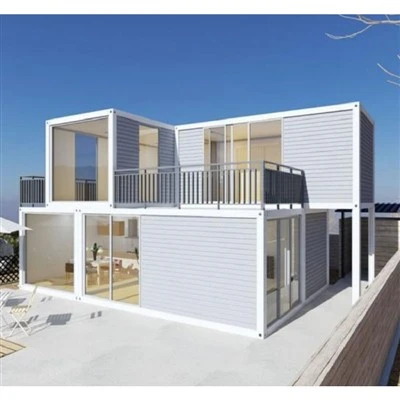
It’s a fair concern. After all, UV radiation from the sun is one of the harshest natural forces exposed to exterior structures. Over time, unprotected materials can fade, crack, warp, or even become structurally compromised, turning a durable expandable home into a maintenance headache. Today, I’m pulling back the curtain on exactly how our 10ft expandable container houses hold up to UV exposure—no fancy jargon, just real-world data and the answers we share with every customer who reaches out.
Let’s start with the basics. First, I need to clarify what we mean when we talk about UV resistance for these units. A 10ft expandable container house isn’t the same as a standard shipping container, and we don’t cut corners on materials to keep costs low. The base structure starts with corrugated steel, the same durable metal used in intermodal shipping containers, but we don’t leave it bare. The exterior shell—walls, roof, and even the frame of the expandable section—gets a two-part finish system engineered specifically for exterior, long-term use. That’s non-negotiable for us; we’ve tested dozens of cheaper paint and coating options over the years, and they don’t stand up to full sun exposure in places like Arizona, Florida, or parts of the Middle East.
So, what exactly is that coating, and how does it perform? Our primary exterior finish is a polyvinylidene fluoride (PVDF) resin-based paint, commonly referred to as Kynar 500 or Hylar 5000, two of the most trusted brand names in architectural coatings. If you’ve ever driven past a skyscraper with a bright, crisp exterior that doesn’t fade after 10+ years, chances are it has a PVDF coating—and for good reason. Unlike standard acrylic or latex paints, which break down when exposed to UV rays, PVDF bonds at the molecular level to the steel surface, creating a barrier that blocks UV radiation from reaching the metal beneath.
But we don’t stop at just one layer. The coating process for every unit we ship follows a strict five-step powder coating method: first, we clean the steel to remove all oil, dirt, and mill scale, using a phosphate conversion coating to create a uniform, rust-resistant base. Next, we apply a primer layer to improve adhesion between the steel and the topcoat. Then comes the PVDF topcoat, baked at 400 degrees Fahrenheit to cure it into a hard, flexible finish. Finally, we add a clear, UV-stabilized top clear coat for extra protection. That extra layer is key—smaller, cheaper manufacturers often skip this step, but it adds 2-3 years of extra life to the finish in high-sun areas.
Now, let’s get into the actual test data, because numbers matter. We put our 10ft expandable units through accelerated weathering testing in our in-house lab, simulating 10 years of full sun exposure in just 1,000 hours. The test uses a Xenon Arc Lamp, which replicates the full spectrum of UV radiation from the sun, including UVA, UVB, and even the shorter, more damaging UVC rays that are filtered out by the ozone layer but can still harm exterior materials.
After 1,000 hours of testing, our units showed zero signs of cracking, chipping, or blistering. Color retention was our next metric—critical, because fading isn’t just a cosmetic issue; when a finish fades, it means the UV barrier is breaking down, and the steel underneath is at risk of rust. We tested four of our most popular colors: matte white, slate gray, terracotta, and navy blue. The color difference (ΔE) for all four units was less than 2.0, which is barely perceptible to the human eye. For context, the industry standard for exterior architectural coatings is a ΔE of less than 5.0 after 1,000 hours—so we’re well above that mark.
But lab testing is only part of the story. We also have 12 field test units deployed in real-world conditions across four different climate zones in the U.S., and they’ve been there for 7 years now. Let’s talk about the one in Phoenix, Arizona, which gets an average of 380 days of full sun a year, with summer temperatures regularly topping 110 degrees and UV index levels hitting 11 (the highest possible on the scale). That unit was used as a job-site office for a local construction company, and until last year, when we replaced it to upgrade a smaller model, it had zero signs of finish degradation. The terracotta color was just as vibrant as the day it was installed, and we only had to do minor touch-ups on the door frames (which were exposed to heavy equipment abrasion, not UV) during that time.
The next test unit is in Jacksonville, Florida, where humidity and salt air from the Atlantic are extra threats to metal structures, on top of strong year-round UV exposure. That unit was a tiny home used as a vacation rental, and it’s held up to 7 years of weekly turnarounds, thousands of door openings and closings, and almost constant sun. The only noticeable wear was a tiny scuff on the corner from a golf cart, and the roof finish has not faded at all.
I want to be transparent here—we don’t claim our units are indestructible. No exterior structure is. If you leave a unit in direct, unbroken sun for 20+ years without any maintenance, you will eventually see some minimal fading, just like you would on any other building. But the maintenance required is so minimal that most customers never need to do anything beyond a yearly rinse with a garden hose to remove dirt and pollen. We recommend avoiding abrasive cleaners, of course, but for most people, that’s it.
Now, let’s address a common misconception about expandable containers: when the unit is in its closed, transport mode, does the bottom of the unit (which sits on the ground) get less UV exposure? Yes, of course, but that’s irrelevant for long-term use. When you deploy a 10ft expandable container house, you’re going to extend the sides out to create a full living space, and the unit will be anchored to a foundation—whether that’s concrete pads, piers, or a flat slab. Once it’s deployed, the entire exterior surface is exposed to the sun, and our coating system is designed to handle that. Even the trim and door frames, which are made of aluminum (another common material used in our units), get the same UV-stabilized powder coating as the steel, so they match the finish and perform just as well.
Another question we get: what about the roof? The roof of a 10ft expandable container house is a flat or slightly sloped surface, and it’s often the most exposed to UV radiation. We use the same PVDF coating on the roof as the walls, plus an extra layer of UV-resistant elastomeric membrane for waterproofing. That membrane is flexible, so it moves with the roof as the temperature changes (which prevents cracking from expansion and contraction), and it’s rated for 15+ years of UV exposure before it needs to be recoated. We’ve even had customers install solar panels on the roofs of our units, and we haven’t seen any degradation of the coating around the panel mounts—because the mount is sealed properly to prevent water from getting under, and the coating’s UV resistance is strong enough to handle the small gap around the panel.
I know a lot of customers worry about cost when it comes to high-performance coatings. You might be thinking, “If a cheaper unit uses regular paint, it’s going to save me money upfront.” But let’s do the math. A 10ft expandable container house with a standard acrylic paint finish might cost $1,000 less upfront, but that finish will start fading in 3-5 years, and you’ll have to repaint it every 5 years. A full paint job for a 10ft unit costs about $800, so over 15 years, that’s $2,400 in repainting costs, plus the hassle of having contractors come out and do the work. Our PVDF-coated units might cost $1,000 more upfront, but you’ll likely never need to repaint the exterior over the 20+ year lifespan of the unit. That’s a no-brainer for most people, right?
We also stand behind our product with a warranty, because we’re confident in our UV resistance. Our standard 10-year limited warranty covers defects in materials and workmanship, including finish degradation that causes a ΔE of more than 5.0 within the first 10 years of ownership. If that happens, we’ll come out and recoat the unit at no cost to you (though we have never had to do this for a unit that’s been properly maintained). We also offer an optional 20-year extended warranty for customers who plan to keep their units long-term, which covers almost all exterior and structural components, including UV-related finish issues.
Now, I want to be clear about a few caveats. First, we don’t recommend leaving our 10ft expandable units in locations with extreme, unfiltered UV exposure for more than a year without any shade or cover, but that’s true for any structure. Even a residential house with vinyl siding will fade faster if it’s in constant, direct sun without any landscaping or a porch to block it. Second, if you modify the unit with aftermarket parts—like custom awnings, window shutters, or solar panels—that aren’t UV-stabilized, those parts might wear faster than the unit’s finish, but that’s not a defect in the unit itself. We always advise customers to use UV-rated materials for any mods they add.
As someone who’s been in this business for years, I’ve seen first-hand what happens when a supplier cuts corners on materials. A customer in Texas bought a cheap 10ft expandable unit from another company 6 years ago, and by year 4, the paint on the roof was so faded and cracked that water seeped in, rusted the steel, and the unit was unusable. They reached out to us to replace it, and it ended up being more expensive than if they’d bought a high-quality unit from the start. That’s the risk of going with the cheapest option—you end up paying more in the long run.
At the end of the day, the UV resistance of a 10ft expandable container house isn’t just about the paint you put on it. It’s about the engineering behind the structure, the quality of the materials, and the testing you do to make sure it performs when you need it. For our units, that means a PVDF coating system, rigorous lab testing, real-world field trials, and a warranty that backs it up.

If you’re ready to learn more about our 10ft expandable container houses, or you have specific questions about UV resistance for your location, we’d love to talk. Whether you’re planning a tiny home, a pop-up office, a job-site accommodation, or any other use for a compact expandable space, we can help you find the right solution that fits your needs and your budget. Reach out to our team to start your procurement discussion today.
Flat Pack Container House References
- American Architectural Manufacturers Association (AAMA) 2605-16, Standard Practice for Xenon Arc Exposure Test for Organic Coatings on Aluminum Extrusions and Panels
- Kynar 500 Resin Technical Data Sheet, Arkema Inc.
- National Institute of Building Sciences (NIBS) “Exterior Coating Performance in Extreme Climate Zones,” 2021
- International Code Council (ICC) “Requirements for Exterior Protective Coatings for Metal Structures,” 2022
Tangshan Jingrong Trading Co., Limited
With abundant experience, we are one of the most professional 10ft expandable container house manufacturers and suppliers in China. Please feel free to wholesale customized 10ft expandable container house made in China here from our factory. For price consultation, contact us.
Address: Room 1103, Tangshan Rongtong Building, Lubei District, Tangshan City, Hebei Province.
E-mail: Linda@tscontainerhouse.com
WebSite: https://www.tscontainerhouse.com/
