If you’ve ever stood in a utility room staring at a row of old, clunky mechanical meters, you know how frustrating it is to get inaccurate energy usage data—data that’s supposed to help you cut costs or meet building efficiency goals. That’s where ultrasonic BTU meters come in. As someone who’s spent the last decade working with these devices, testing them in everything from residential hydronic heating systems to large-scale district cooling networks, I’ve learned their performance only ever lives up to their promise if they’re installed in the right environmental conditions. Skip the basics—wrong placement, temperature swings, or even pipe material—and you’ll end up with readings that are off by 5%, 10%, or worse. No business or homeowner wants that. Over the years, I’ve seen first-hand how even small environmental missteps turn a reliable ultrasonic meter into an expensive paperweight. So let’s break down exactly what conditions these meters need to work as intended, from pipe characteristics to ambient surroundings, and why getting this right matters more than just “following the manual.” Ultrasonic BTU Meter
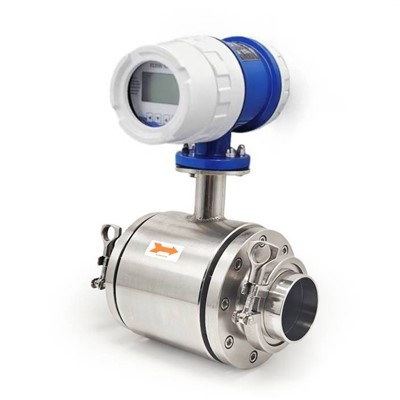
First, let’s start with the core: ultrasonic BTU meters don’t work the same way as mechanical meters. Instead of a spinning turbine, they use sound waves to measure the velocity of fluid flowing through a pipe, then pair that with temperature data from two sensors (one on the supply line, one on the return line) to calculate how much heating or cooling energy is transferred. That technology makes them low-maintenance, long-lasting, and way more accurate than mechanical alternatives—but it also makes them sensitive to environmental factors that mess with sound transmission. The single biggest variable here is the pipe itself and the fluid moving through it, because ultrasonic sound travels through liquid, not air or metal.
Let’s talk fluid conditions first. The absolute minimum for consistent readings is that the fluid has to be 100% liquid with no entrained gas. Even tiny bubbles, like the ones that form in a hydronic system after a pump is turned off and on, can scatter sound waves so much that the meter’s sensors can’t pick up a clear velocity reading. Last year, a small commercial building in Minneapolis called me in because their new ultrasonic meter was showing wildly inconsistent usage numbers, making their heating bill jump 20% overnight. When I arrived, the issue was a partially open air vent on the top floor of the building—enough air was getting into the loop that the fluid had 2-3 parts per million of entrained gas, just enough to throw the meter off. It took three days of bleeding the system and adjusting the vent to fix it. The technical threshold here is less than 0.05% gas volume by total fluid volume; any more than that and the meter’s signal strength drops below the minimum threshold it needs to function. That’s a non-negotiable condition, no matter what the rest of the system looks like.
Next, fluid type and purity. Ultrasonic meters work best with clean, homogeneous fluids. For most residential and light commercial applications, that’s standard glycol-water mix—common for hydronic heating or geothermal systems. But if the fluid has suspended solids, like scale, rust, or sediment from old pipe work, that’s a problem too. Those solids can also scatter sound waves, and over time they can build up on the meter’s transducers (the little sensors that send and receive sound) or on the pipe wall, blocking the signal. I once had a customer with a 10-year-old meter that suddenly started reading low; when we pulled it out for testing, there was a 1mm layer of rust on the transducer face, enough to reduce signal velocity by 15%. For that reason, we always recommend a strainer be installed upstream of the meter to catch any large particles, regardless of fluid type. Also, pH levels matter for long-term performance. Fluids with a pH below 7 (acidic) can corrode pipe walls or the meter’s internal components, while pH above 9 (alkaline) can cause scale buildup. The sweet spot for most ultrasonic meters is a pH between 7.2 and 8.5, a range that’s standard for properly treated hydronic and chilled water systems, but something to double-check if you’re working with custom fluid mixes, like industrial process fluids.
Moving on to pipe conditions, which are just as important as the fluid. First, pipe material. Ultrasonic meters rely on sound passing through the fluid, so the pipe wall can’t be too thick or too dense. Metal pipes like copper and carbon steel work fine, but ductile iron pipes (common in some older district heating systems) are a common pitfall. Ductile iron is so dense that it attenuates sound waves before they even reach the fluid, leading to weak signals and inaccurate readings. We had to adjust our meter models a few years ago to include a larger transducer for thick ductile iron pipes, but even then, we recommend pre-testing signal strength before full installation. Pipe diameter is another key factor: ultrasonic meters are calibrated for specific diameter ranges, usually between 15mm and 300mm for residential and commercial models. If you install a 20mm meter on a 25mm pipe, there’s not enough fluid volume for the sound waves to properly reflect, and readings will be inconsistent. We always ask customers for exact pipe diameter, wall thickness, and material during the initial consultation, because that’s what determines which meter model is suitable—not just the BTU load of the building.
Pipe cleanliness is also critical, right alongside fluid cleanliness. Scale, wax deposits, or even years of mineral buildup on the inner pipe wall can change the sound path, causing the meter to miscalculate velocity. New pipe work is a particularly big risk—even after flushing, small metal shavings or construction debris can remain in the system, leading to sensor damage or signal interference. Our team always recommends waiting at least two weeks after new pipe installation to put in an ultrasonic meter, and running a system flush with a filter to catch any remaining debris. For older systems, we usually suggest testing the inner pipe wall condition with a ultrasound thickness gauge before installation; if there’s more than 2mm of scale buildup, we can adjust the meter’s calibration to compensate, but it’s better to clean the pipe first if possible for the most accurate readings.
Now, ambient and installation conditions, which are often overlooked by installers who are just trying to get the meter up and running. Temperature is a big one. Ultrasonic BTU meters have both a fluid temperature range and an ambient operating range. The standard range for most of our residential models is -10°C to 60°C (14°F to 140°F) for ambient conditions, and 0°C to 120°C (32°F to 248°F) for fluid temperatures. Installing a meter in an unheated basement in Minnesota, where winter temperatures drop to -15°C, will cause the internal electronics to glitch, leading to incorrect temperature readings and shutdowns. For high-temperature applications, like industrial process heating, we offer specialized models rated up to 180°C, but even those need to be installed with proper insulation to prevent overheating in ambient temperatures above 50°C.
Mounting position is another mistake I see all the time. Ultrasonic meters need to be installed in a section of straight pipe, no bends, valves, or pumps within 10 pipe diameters upstream and 5 pipe diameters downstream. Why? Bends and valves cause flow distortion—swirl, eddies, and uneven flow—that makes the velocity readings inaccurate. Last year, a customer installed our meter right after a 90-degree elbow, and the readings were off by 8% for two months before we realized the mistake. Moving it just three feet downstream, where the flow stabilized, fixed the issue completely. Also, meters can be installed horizontally or vertically, but vertical installation is only suitable if the flow is upward. If you install a meter vertically with flow downward, air bubbles get trapped in the meter’s flow path, which we already know is a big problem for readings. That’s a common installer error, so we always include a quick mounting guide in our product packages, but we also offer on-site training for larger commercial projects to avoid that kind of mistake.
Power supply conditions are easy to forget, but they impact reliability too. Most ultrasonic meters are either battery-powered or hardwired to AC power. If using battery power, make sure the ambient temperature is within the battery’s operating range—extreme cold or heat will drain batteries prematurely, leading to gaps in data. For hardwired models, voltage fluctuations can cause electronics to fail, so we recommend installing a surge protector in areas with unstable power grids. I once had a customer in a rural area with frequent power outages who was replacing meter batteries every six months until we installed a backup power module, which extended battery life to three years. That’s a small adjustment, but it makes a huge difference for long-term performance.
Wait, let’s not forget about pressure. Fluid pressure within the system affects how well sound travels, too. The minimum operating pressure for our meters is 0.1 MPa, and maximum is 2.5 MPa. Installing a meter in a low-pressure system, like a small residential heating loop that only runs at 0.05 MPa, will cause the fluid to boil at lower temperatures, creating entrained gas and inaccurate readings. For high-pressure industrial systems, we offer pressure-rated models with reinforced transducers to handle higher pressure without leaks or signal distortion. That’s another point that’s rarely discussed in basic guides, but it’s crucial for avoiding problems.
Now, why does all this matter, beyond just getting a “correct” number? The biggest use case for ultrasonic BTU meters is billing and efficiency reporting. In many regions, utilities use BTU meter data to charge commercial and even some residential customers for heating and cooling usage, so inaccurate readings lead to overbilling. For building operators, reliable meter data is the foundation of efficiency projects—if a meter reads 10% low, you might think your new insulation is saving energy, when actually the meter is just broken. As someone who works with these meters daily, I can tell you that I’ve seen way too many companies waste money on energy upgrades because their meter data was faulty, all because they skipped checking these environmental conditions.
I also want to note that these conditions are not “one-size-fits-all.” A small residential system will have different requirements than a large district cooling network, or an industrial process loop. That’s why we offer a free pre-installation assessment for all customers, where our team comes out to check pipe material, diameter, fluid condition, ambient temperature, and pressure to recommend the right meter model and installation setup. No two systems are exactly the same, and a meter that works perfectly in a new home in Arizona might not work at all in an old factory in Michigan.

If you’re in the market for an ultrasonic BTU meter, whether for a single home or a multi-building campus, don’t just look for the lowest price or the most features. Take the time to check the environmental conditions we’ve talked about: fluid cleanliness and gas content, pipe material and diameter, straight pipe requirements, temperature, pressure, and mounting position. If you’re not sure how to assess any of these, or if you want help making sure your setup is right, our team is here to walk you through every step. We’ve installed thousands of meters across North America and Europe, and we know how to avoid the common pitfalls that turn good technology into bad results. Whether you need a small residential model or a custom high-capacity meter for an industrial application, we can match you with the right product and support to get accurate, reliable readings for years to come. Reach out to our team to discuss your project, ask questions, or schedule that free pre-installation assessment—we’re happy to help.
Digital Sensor References:
- International Organization for Standardization (ISO). Measurement of fluid flow in closed conduits – Ultrasonic transit-time meters for liquids, ISO 17089-1:2019.
- Spitzer, D. W. (2018). Flow Measurement: Practical Guides for Measurement and Control. ISA Publications.
- American Society of Heating, Refrigerating and Air-Conditioning Engineers (ASHRAE). Chapter 26: Energy Metering and Submetering, ASHRAE Handbook – HVAC Applications, 2023.
- Hydronics Institute. Hydronic System Design and Installation Best Practices, 5th ed. 2021.
Dalian Yheng Technology Co., Ltd.
Dalian Yheng Technology Co., Ltd. is one of the leading ultrasonic btu meter manufacturers and suppliers in China, also supports customized service. We warmly welcome you to buy high quality ultrasonic btu meter in stock here from our factory. Contact us for more details.
Address: F1605, NO.10 Huoju road, High-tech Industrial Zone, Dalian, China
E-mail: admin@dlyheng.com
WebSite: https://www.yhengphmeter.com/
