As a seasoned supplier of automotive stamping parts, I’ve witnessed firsthand the rapid evolution of the automotive industry. One of the most exciting areas of development is the exploration of new materials for automotive stamping parts. These advancements not only enhance the performance and safety of vehicles but also contribute to environmental sustainability and cost – effectiveness. In this blog, I’ll share some of the most promising new materials that are currently being explored in the field. Automotive Stamping Part
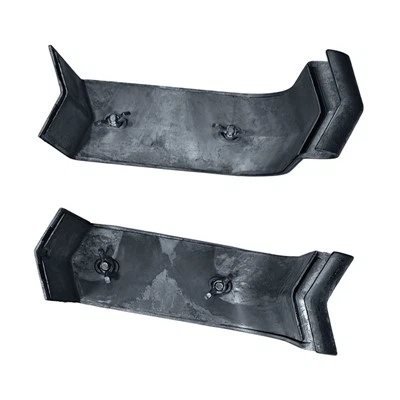
High – Strength Steel
High – strength steel (HSS) has been a game – changer in the automotive stamping industry. Traditional steels are being gradually replaced by HSS due to its superior strength – to – weight ratio. Advanced high – strength steels (AHSS) and ultra – high – strength steels (UHSS) offer significant improvements over conventional steels.
AHSS can be further divided into different types such as dual – phase steel, transformation – induced plasticity (TRIP) steel, and complex – phase steel. Dual – phase steel consists of a ferrite matrix with martensite islands, which provides a combination of high strength and good formability. This makes it ideal for automotive stamping parts like cross – members and rocker panels. TRIP steel, on the other hand, exhibits high ductility and energy absorption capacity during deformation, making it suitable for parts that require impact resistance, such as crash boxes.
UHSS, like martensitic steel, has extremely high strength, which can withstand high stress levels. It is often used in components that contribute to the vehicle’s safety cage, such as A – pillars and B – pillars. The use of HSS in stamping parts reduces the weight of the vehicle, leading to better fuel efficiency and lower emissions. At the same time, it maintains or even improves the vehicle’s structural integrity, enhancing passenger safety.
Aluminum Alloys
Aluminum alloys are another class of materials that are gaining popularity in the automotive stamping industry. Aluminum is known for its low density, which is approximately one – third that of steel. This significant weight reduction can lead to substantial savings in fuel consumption over the vehicle’s lifetime.
In addition to its light weight, aluminum alloys offer good corrosion resistance, which is especially important for automotive parts exposed to harsh environmental conditions. For stamping applications, aluminum alloys like 5xxx and 6xxx series are commonly used. The 5xxx series alloys, which contain magnesium as the main alloying element, have good formability and weldability. They are often used for automotive body panels such as hoods and doors.
The 6xxx series alloys, with magnesium and silicon as the main alloying elements, offer a good balance of strength, formability, and corrosion resistance. These alloys are suitable for structural components like suspension parts and chassis frames. However, stamping aluminum alloys comes with its own set of challenges. Aluminum has a lower formability compared to steel at room temperature, and it also has a higher spring – back tendency. But with the development of advanced stamping techniques and die design, these challenges are being gradually overcome.
Carbon Fiber Reinforced Polymers (CFRPs)
Carbon fiber reinforced polymers are perhaps the most revolutionary materials being explored for automotive stamping parts. CFRPs consist of carbon fibers embedded in a polymer matrix, usually epoxy resin. They offer an extremely high strength – to – weight ratio, far superior to both steel and aluminum.
CFRPs are already used in high – performance and luxury vehicles, mainly in components such as body panels, roofs, and even some structural parts. The use of CFRPs can significantly reduce the weight of the vehicle, leading to improved acceleration, handling, and fuel efficiency. Moreover, CFRPs have excellent fatigue resistance, which is crucial for automotive parts that are subjected to repeated loading.
However, the widespread use of CFRPs in mainstream automotive stamping is still limited by several factors. One of the main challenges is the high cost of production. Carbon fibers are expensive to manufacture, and the process of combining them with the polymer matrix and molding them into parts is complex and time – consuming. In addition, CFRPs have relatively poor impact resistance compared to metals, and they require special joining techniques. But as research progresses and production methods become more efficient, we can expect to see an increase in the use of CFRPs in automotive stamping parts.
Magnesium Alloys
Magnesium alloys are the lightest structural metals available, making them highly attractive for automotive applications. With a density approximately two – thirds that of aluminum and one – fourth that of steel, magnesium alloys can contribute to significant weight reduction in vehicles.
In automotive stamping, magnesium alloys are mainly used in interior components, engine parts, and some structural components. They offer good machinability and vibration damping properties. However, magnesium alloys also have some limitations. They are more prone to corrosion compared to aluminum and steel, especially in humid and corrosive environments. Also, their formability at room temperature is relatively poor, but warm stamping techniques can improve their formability.
The development of new surface treatment technologies can help to address the corrosion issue. For example, applying protective coatings can enhance the corrosion resistance of magnesium alloy stamping parts. As the automotive industry continues to pursue weight reduction goals, the exploration and application of magnesium alloys in stamping are expected to grow.
Hybrid Materials
Hybrid materials, which combine two or more different types of materials, are also being explored for automotive stamping parts. For example, combining steel and aluminum in a single stamping part can take advantage of the high strength of steel and the light weight of aluminum. This can be achieved through techniques such as adhesive bonding, mechanical joining, or welding.
Another type of hybrid material is the combination of fiber – reinforced polymers with metals. By using a metal core and a fiber – reinforced polymer outer layer, the part can have both high strength and good energy absorption properties. Hybrid materials offer the potential to optimize the performance of automotive stamping parts while meeting various design requirements.
Conclusion

The exploration of new materials for automotive stamping parts is an ongoing and exciting process. High – strength steel, aluminum alloys, carbon fiber reinforced polymers, magnesium alloys, and hybrid materials all offer unique advantages and challenges. As a supplier of automotive stamping parts, we are constantly investing in research and development to stay at the forefront of these material innovations.
Stamped Parts By using these new materials, we can help our automotive customers to produce vehicles that are lighter, more fuel – efficient, safer, and more environmentally friendly. If you are in the automotive industry and are looking for high – quality stamping parts made from the latest materials, we’d love to have a conversation with you. Our team of experts can provide you with customized solutions based on your specific requirements. Let’s work together to shape the future of the automotive industry through innovative stamping part solutions.
References
- Dieter, G. E. (2000). Mechanical Metallurgy. McGraw – Hill.
- Kalpakjian, S., & Schmid, S. R. (2008). Manufacturing Engineering and Technology. Pearson Prentice Hall.
- SAE International Technical Papers. Various issues on automotive materials and stamping.
Yuyao Aozhou Metal Products Co., Ltd.
We are one of the most experienced automotive stamping part manufacturers and suppliers in China. With a professional production team, we are able to meet the needs of the majority of our customers. Please rest assured to buy customized automotive stamping part made in China here from our factory.
Address: No.6, Nanbailonggang, Wuma Industrial Zone, Lubu Town, Yuyao City
E-mail: xqr-2316@163.com
WebSite: https://www.cnaozhou.com/
