Hey there! I’m a supplier of dithiocarbamate collectors, and I’ve been knee – deep in the flotation industry for quite a while. Today, I wanna chat about how dithiocarbamate collectors interact with other reagents in the flotation system. Dithiocarbamate Collectors
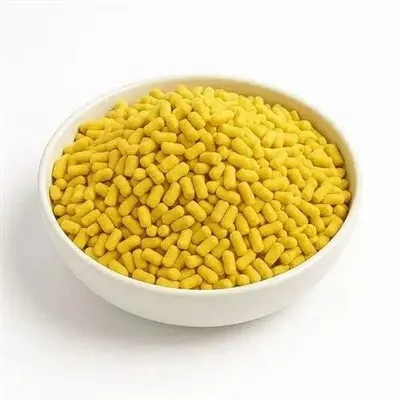
Let’s start with the basics. Dithiocarbamate collectors are pretty popular in the flotation world. They’re known for their strong collecting ability, especially for sulfide minerals. But in a flotation system, they don’t work alone. They have to play nice with other reagents, and these interactions can make or break the flotation process.
Interaction with Frothers
Frothers are crucial in flotation. They create a stable froth that can carry the floatable minerals to the surface. When dithiocarbamate collectors meet frothers, it’s a bit of a give – and – take relationship.
The frother can affect how well the dithiocarbamate collector attaches to the mineral surface. Sometimes, a good frother can help the collector disperse better in the pulp. For example, if the frother has a surfactant – like property, it can reduce the surface tension of the solution. This makes it easier for the dithiocarbamate collector to spread around and find its target minerals.
On the flip side, the collector can also influence the froth stability. Dithiocarbamate collectors might change the surface properties of the bubbles in the froth. If there are too many collector molecules adsorbed on the bubble surface, it could make the froth too stable or too unstable. An overly stable froth can be a headache because it might not break easily during the de – watering process. And an unstable froth means the minerals won’t be effectively carried to the surface.
Interaction with Activators
Activators are used to enhance the floatability of minerals. When dithiocarbamate collectors and activators team up, some interesting things happen.
Take copper sulfate as a common activator. In a system where we’re trying to float zinc sulfide minerals, copper sulfate can activate the zinc sulfide surface. It forms a copper sulfide layer on the zinc sulfide, making it more receptive to the dithiocarbamate collector. The collector can then more easily chemisorb onto the activated surface. This activation – collection process is a key part of many complex sulfide ore flotation operations.
However, we have to be careful with the amount of activator. If there’s too much copper sulfate, it might start activating other unwanted minerals in the ore. This can lead to a decrease in the selectivity of the dithiocarbamate collector. So, it’s all about finding that sweet spot where the activator does its job of enhancing the target mineral’s floatability without causing a mess.
Interaction with Depressants
Depressants are used to prevent certain minerals from floating. When dithiocarbamate collectors and depressants are in the same system, it’s like a tug – of – war.
For example, sodium cyanide is a common depressant for pyrite in sulfide ore flotation. If we’re trying to float other valuable sulfide minerals using dithiocarbamate collectors, we want to keep the pyrite from floating. The sodium cyanide forms a stable complex on the pyrite surface, which prevents the dithiocarbamate collector from adsorbing.
But here’s the catch. The depressant can also have some side effects on the target minerals. If the concentration of the depressant is too high, it might start depressing the target minerals as well. And sometimes, the dithiocarbamate collector can compete with the depressant for the mineral surface. So, we have to carefully balance the dosages of both the collector and the depressant to get the best separation results.
Interaction with pH Modifiers
pH is a big deal in flotation. pH modifiers, like lime or sulfuric acid, can change the chemical environment in the pulp. And this has a huge impact on how dithiocarbamate collectors interact with other reagents.
At different pH values, the surface charge of the minerals changes. Dithiocarbamate collectors are sensitive to these changes. For example, in an alkaline environment created by lime, some sulfide minerals may have a negative surface charge. The dithiocarbamate collector, which also has a certain charge characteristic, will interact with the mineral surface differently compared to an acidic environment.
The pH can also affect the stability of other reagents. Some activators or depressants might work better at specific pH values. So, when adjusting the pH, we need to consider how it will impact the overall interaction between the dithiocarbamate collector and all the other reagents in the system.
Practical Considerations in the Flotation Plant
In a real – world flotation plant, these interactions are even more complex. There are so many variables at play, like the type of ore, the water quality, and the operating conditions.
We’ve seen cases where a small change in the reagent dosage can have a big impact on the flotation performance. For example, a slight increase in the amount of frother might seem like a good idea to improve the froth stability. But if we don’t consider how it will interact with the dithiocarbamate collector, it could lead to a decrease in the recovery of valuable minerals.
That’s why it’s so important to have a good understanding of these interactions. As a dithiocarbamate collector supplier, I always work closely with my customers. We do lots of tests in the lab to find the optimal reagent combination for their specific ore. It’s a bit of a trial – and – error process, but with patience and careful analysis, we can usually find a solution that works well.
Conclusion and Call to Action
Well, that’s a wrap on how dithiocarbamate collectors interact with other reagents in the flotation system. It’s a complex but fascinating topic. These interactions can have a huge impact on the efficiency and profitability of a flotation operation.
Xanthate If you’re in the flotation business and looking for high – quality dithiocarbamate collectors or need some advice on reagent interactions, I’m here to help. Just reach out, and we can have a chat about your specific needs. Whether it’s a small – scale operation or a large – scale mine, I’m confident we can find the right solution for you.
References
- Fuerstenau, D. W., & Han, K. N. (2003). Principles of Flotation. SME.
- Somasundaran, P., & Fuerstenau, D. W. (1966). Adsorption of xanthates and dithiocarbamates at sulfide mineral – solution interfaces. Journal of Colloid Science, 21(6), 684 – 710.
- Poling, B. E., Prausnitz, J. M., & O’Connell, J. P. (2001). The Properties of Gases and Liquids. McGraw – Hill.
Bitop Bihope Qingdao Mining Co., Ltd
Bitop Bihope Qingdao Mining Co., Ltd. is one of the most professional sulfur and nitrogen manufacturers and suppliers in China, featured by quality products and low price. Please rest assured to buy discount sulfur and nitrogen in stock here and get quotation from our factory. Customized orders are welcome.
Address: Room 410, 4th Floor, Shengquan Business Building, No. 263 Yitong Road, Huangdao District, Qingdao City, Shandong Province, China
E-mail: btbhmining@163.com
WebSite: https://www.btbhmining.com/
