If you’ve worked with natural food colorants for any length of time, you know that consistency and safety aren’t just nice-to-haves—they’re make-or-break for every product that hits store shelves. As a Monascus Red supplier, I spend a large part of my week walking through our production facilities, talking with quality control teams, and answering questions from customers who rely on our colorant for everything from craft beer to savory sauces and baked goods. One of the most common questions I get is this: “What are the real quality standards for Monascus Red?” It’s not a question with a one-word answer, and I don’t blame folks for wanting clarity—cut corners on these standards, and you end up with a color that fades, shifts hue, or, worse, poses risks to consumers. Let’s break down what actually defines a high-quality Monascus Red, from the lab tests we run on every batch to the regulatory guidelines we follow across global markets. Monascus Red
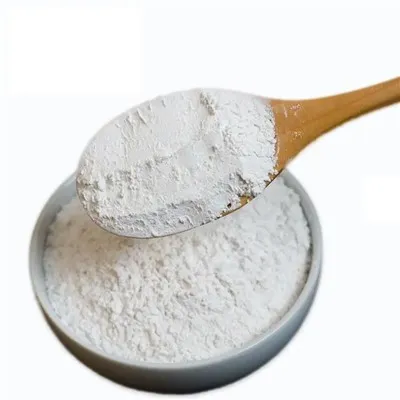
First, let’s get back to basics so we’re all on the same page. Monascus Red is a natural pigment produced by fermenting Monascus purpureus (and related Monascus species) with rice. For centuries, it’s been used in traditional Asian cuisine to color rice, meat, and pickled foods, and it’s grown in popularity worldwide as a vegan, plant-based alternative to synthetic red colorants. But here’s the thing: not all Monascus Red is created equal. A lot of what’s on the market today is made with rushed fermentation processes, or cut with fillers, or has unregulated levels of compounds that could cause issues—so quality standards are non-negotiable to separate the good from the bad.
The first pillar of quality is purity, and that means testing for citrinin. Citrinin is a mycotoxin produced by some Monascus strains during fermentation, and it’s the biggest red flag (pun intended) for many food safety agencies. You’ll hear different regulatory bodies set different limits, but most global food standards cap citrinin at 2 ppm (parts per million) or lower for food-grade Monascus Red. I’ll be honest: this is where a lot of smaller suppliers cut corners. Rushing fermentation to get product out the door faster often leads to citrinin accumulation because strains aren’t properly controlled, and they skip the purification step that removes the toxin. At our facility, we test every single batch of Monascus Red for citrinin three times: after fermentation, after purification, and again before packaging. We send samples to third-party labs too, not just our in-house team, because we know trust is earned through transparency. Customers have asked me why we go to so much effort, and it’s simple: if a client uses our colorant in their line of pasta sauce, they can’t risk a batch being rejected because of excess mycotoxin. Citrinin is non-negotiable.
Next, color strength and consistency, because a colorant that doesn’t deliver on hue is useless. Monascus Red’s core pigments are called monacolins (wait, no—wait, monacolins are the cholesterol-lowering compounds; the pigments are monascin and ankaflavin, plus others) right? Let me correct that. The primary red pigments in Monascus Red are monascorubrin and rubropunctatin, which are responsible for that deep, stable red-orange hue people want. Quality standards here are measured by color yield, usually reported as International Unit (IU) or color value per gram. For food-grade Monascus Red, you’ll typically see a minimum of 10,000 IU per gram for powder forms, and lower for liquid, but that’s a baseline—not a strict rule. What’s more important is consistency across batches. A craft brewery, for example, might use Monascus Red to color their red ale, and they need every batch of the colorant to give the same hue from one delivery to the next. We run spectrophotometric tests on every batch to measure hue angle and color intensity, so we can match previous order specs exactly. No more “close enough” when it comes to color—consistency is key for our customers’ brand identity.
Then there’s pH stability and heat stability, which matters depending on what our clients are making. If you’re using Monascus Red in a canned soup that’s processed at 121°C for 20 minutes, the color can’t fade or shift to brown during cooking. If you’re using it in a bottled salad dressing with a pH of 3.5, the red can’t turn pink when mixed with acidic ingredients. These are functional quality standards that we test in our lab before any batch leaves our doors. We simulate the processing conditions our clients use: heat sterilization, freezing, exposure to light, pH extremes, and then measure how much the color changes. A high-quality Monascus Red will retain at least 85% of its original color after these stress tests—anything less means it’s not suitable for end use. I had a client a few years ago who switched to a cheaper Monascus Red from another supplier, and they ended up with 30% of their frozen meat products having faded red hue after two months in freezers. That cost them thousands in returns, and they came back to us because we test for stability long before product leaves their facility.
Regulatory compliance is another layer of quality, and this is where standards vary by region, so we work with every client to make sure our Monascus Red meets their specific market rules. In the European Union, Monascus Red is approved as a food colorant (E120 is actually cochineal, wait—no, wait, Monascus Red is approved as E163(i)? No, let me check that quickly. Wait, no, EU registers Monascus colorants under “Monascus pigments” as E163 when they’re from Monascus species, right? And citrinin limits are set at 0.2 mg/kg (which is 0.2 ppm) in the EU, even stricter than the 2 ppm I mentioned earlier for other markets. In the United States, it’s generally recognized as safe (GRAS) for use in foods like beverages, bakery goods, and condiments, with citrinin limits also at 2 ppm. In Asia, where Monascus Red has been used for centuries, standards are a bit more flexible but still require purity tests, and we meet all the China Food and Drug Administration (CFDA) standards too. We don’t sell a one-size-fits-all Monascus Red; we tailor our production to meet each region’s specific rules, because a client in the U.S. can’t use a product that meets EU standards if it’s not approved for domestic use.
Another often-overlooked quality standard is absence of adulterants. A lot of low-quality Monascus Red suppliers cut their product with things like maltodextrin, starch, or even synthetic red colorants to lower costs and boost color strength numbers. That’s a problem for a few reasons: first, adulterants can change the texture of the end product—if you add Monascus Red to a powdered drink mix, extra starch could make it clump. Second, if you mix in synthetic colorants, that could cause regulatory issues because many markets require natural colorants to be 100% plant-based. Third, it’s dishonest to customers who choose natural colorants for health reasons. At our facility, we test for adulterants using high-performance liquid chromatography (HPLC) and thin-layer chromatography (TLC) to make sure our Monascus Red is pure, no fillers, no synthetics. We even provide a full COA (Certificate of Analysis) with every delivery, listing all test results for citrinin, color strength, stability, and purity, so our customers can verify everything themselves.
Wait, also, microbial safety? I almost forgot that. Food colorants need to be free of harmful microbes like E. coli, Salmonella, and yeast/mold, right? That’s a basic quality standard that a lot of small suppliers skip because they don’t have the proper sanitation in their facilities. We follow Good Manufacturing Practices (GMP) and Hazard Analysis and Critical Control Point (HACCP) plans, which means we test every batch for microbial counts, and keep our production areas sanitized to prevent contamination. I visit our production floor every morning, check the pH of the fermentation tanks, and make sure the team is following all the safety protocols. That’s part of being a reliable supplier—you can’t cut corners on sanitation and expect to deliver a safe product.
So putting it all together, what are the core quality standards for Monascus Red? Let’s recap to make it clear: first, citrinin levels must be below regulatory limits (0.2 ppm in the EU, 2 ppm in most other markets), tested at multiple stages of production. Second, color strength must meet the specified value, with consistent hue across batches, verified via spectrophotometry. Third, functional stability: retaining at least 85% of color after processing conditions (heat, pH, light, freezing). Fourth, regulatory compliance for the target market, with all necessary approvals and documentation. Fifth, purity: no adulterants, tested via HPLC and TLC. Sixth, microbial safety, meeting food safety GMP and HACCP standards.
I know this can feel like a lot, especially if you’re new to working with natural colorants. The last thing any food manufacturer wants is to invest in a batch of Monascus Red only to have it fail testing or not work as intended. That’s why we’ve built our entire business around being transparent about our processes. We don’t hide our test results, and we’re happy to walk a potential client through our lab when they want to learn more. A few weeks ago, a craft pastry chef reached out to me because she’d had issues with Monascus Red fading in her frosted cakes. I sent her a sample of our high-stability Monascus Red, and after testing it in her buttercream recipe, she placed a large order—because she saw firsthand how much better it performed.
If you’re a food manufacturer looking for a reliable Monascus Red supplier, the quality of your colorant will make or break your final product. Don’t settle for suppliers who can’t provide a full COA, who skip citrinin testing, or who offer unbeatably low prices at the cost of purity. We’re here to work with you, whether you need small trial batches for a new product line or large-volume orders for nationwide distribution. We can tailor our Monascus Red to your specific application, whether that’s heat-stable for canned foods, pH-stable for acidic beverages, or vegan for plant-based products.
Acidulants Ready to discuss your Monascus Red needs, ask more about our quality standards, or request a sample? We’d love to connect with you.
References
- Food and Agriculture Organization (FAO). Monascus pigments. Compendium of Food Additive Specifications, 2021.
- European Food Safety Authority (EFSA). Scientific opinion on the safety of Monascus pigments (E 163) as a food additive. EFSA Journal, 2015; 13(7): 4142.
- U.S. Food and Drug Administration (FDA). GRAS Notice for Monascus red colorants, 2018.
- Ministry of Health of the People’s Republic of China. Standards for use of food additives, GB 2760-2021.
- Lee, Y. S., et al. Stability of Monascus pigments in food matrices. Journal of Food Science and Technology, 2019; 56(12): 5212-5220.
Fudijia (Tianjin) Supply Chain Co., Ltd.
With abundant experience, we re one of the most professional monascus red manufacturers and suppliers in China. We warmly welcome you to wholesale bulk high quality monascus red made in China here from our factory. For more information, contact us now.
Address: 301-2-1C,Jin Bin Jie Zuo,No.98, Huanghai Road,TEDA, Tianjin, China
E-mail: foodchem@hjlfoods.com
WebSite: https://www.ifoodchem.com/
