If you’ve ever installed a Profibus network, whether for a packaging line in a food processing plant or a conveyor system in a manufacturing facility, you know how critical consistent, reliable data transfer is. I’m a Profibus cable supplier who’s spent the last 12 years talking to plant managers, automation integrators, and field technicians about the small, hidden issues that derail even the best-laid network designs. One term comes up again and again when troubleshooting dropped connections or slow data bursts: attenuation distortion. It’s not the flashiest part of network performance, but ignore it, and you’ll be chasing downtime for weeks. Let’s break down what attenuation distortion actually is, why it plagues Profibus cables specifically, and how to avoid it with the right cable choices. Profibus Cable

First, let’s cut through the jargon. At its simplest, attenuation is just the loss of signal strength as a data signal travels down a cable. But attenuation distortion is a specific type of that loss, where different parts of the Profibus signal lose strength at different rates as they move along the line. Profibus uses a specific voltage-modulated digital signal—each data bit is represented by a distinct voltage level, and the sequence of bits makes up the commands that tell a PLC to start a motor or a sensor to send a temperature reading. When some of those voltage levels fade faster than others, the signal gets “smeared out” or distorted. A technician at a automotive parts plant I worked with last year described it perfectly: “It’s like trying to read a sentence where half the letters are written in pencil and half in pen—you can make out words, but some parts are blurry enough that you misread the whole thing.” That’s attenuation distortion in action for Profibus.
Now, why is this particular to Profibus cables? Profibus operates at standard baud rates ranging from 9.6 kbps all the way up to 12 Mbps, which is among the higher speeds used in industrial field networks. Higher baud rates mean the individual signal pulses (the bits) are much shorter in duration, so even tiny differences in attenuation across the signal’s components have a huge impact. For context, a 12 Mbps Profibus signal has a pulse duration of just 83 nanoseconds—if one part of that pulse attenuates 10% more than another, it’s enough to make the receiver mix up 0s and 1s. Compare that to older networks with baud rates under 1 Mbps, where a similar attenuation difference would barely be noticeable.
The biggest culprit of attenuation distortion in Profibus cables is, unsurprisingly, the cable itself. Not all Profibus cables are created equal, and cutting corners on the materials or construction is the number one reason we see this issue in the field. Let’s break down the factors that cause attenuation distortion in our cables:
First, conductor material and gauge. Most industrial Profibus standards recommend copper conductors for their conductivity, but not all copper is the same. Solid bare copper is cheap, but it has higher electrical resistance than tinned copper (copper coated with a thin layer of tin to prevent oxidation). When a signal travels through high-resistance copper, high-frequency components (which make up the fast pulses of Profibus) are attenuated much faster than low-frequency components—exactly the unequal loss that causes distortion. Conductor gauge matters too: smaller gauge wire (like 24 AWG instead of the recommended 22 AWG for most Profibus runs) has higher resistance per foot. A 100-meter run of 24 AWG Profibus cable will have 15% more attenuation than the same length of 22 AWG, and that gap widens as baud rate increases. I had a integrator come to me last quarter who’d installed 24 AWG cable for a 500-meter Profibus line at a bottling plant, and they were getting so many data errors that the line would shut down 3-4 times a shift. Swapping to 22 AWG tinned copper cable fixed the issue overnight—no extra hardware, no reconfiguring the network, just better conductor material.
Second, cable shielding and insulation. Profibus is designed for industrial environments, which means it has to fight through electrical noise from motors, variable frequency drives, and power lines. But shielding that’s too thin, or insulation that’s not rated for the right temperature, can make attenuation distortion worse. The insulation around the copper conductors isn’t just for keeping wires from touching—it affects how the signal propagates along the line. If insulation is made of cheap PVC that’s not properly compounded, it can absorb high-frequency signal energy, leading to more attenuation of the high-frequency bits. Similarly, a foil shield that’s not bonded properly to the cable’s drain wire will create gaps in shielding that let external noise into the line, but also cause signal reflection that exacerbates unequal attenuation. A client in a steel mill told me last year that their original Profibus cable had a 0.5 mm foil shield, which was too thin to properly drain signal at 12 Mbps. Even when they fixed their grounding issue, the attenuation distortion was still there because the shield was too porous for high-frequency signals. Upgrading to a 1 mm double-shielded Profibus cable fixed the distortion immediately.
Third, cable length and network topology. Profibus has strict maximum length limits based on baud rate, and exceeding those limits is a surefire way to amplify attenuation distortion. For example, at 12 Mbps, the maximum allowed segment length is just 100 meters; go one meter over, and the attenuation of the high-frequency signal components pushes the receiver’s error correction beyond its limit, resulting in lost data. But it’s not just length—how you lay the cable matters too. Sharp bends, kinks, or running Profibus cable parallel to power lines for long distances can physically damage the cable’s construction, creating uneven impedance along the line. Impedance is the cable’s resistance to alternating current, and if impedance varies along the cable run, different parts of the signal will attenuate at different rates, exactly the definition of attenuation distortion. I’ve seen a technician bend a Profibus cable around a steel I-beam to save two feet of length, creating a 90-degree bend with a radius of just 2 cm (the recommended minimum is 10x the cable diameter). That bent section had 20% more attenuation than the rest of the run, causing the entire line to drop packets every 15 minutes.
Now, let’s talk about how to spot attenuation distortion in your Profibus network, because catching it early can save you thousands in downtime. The signs are often subtle at first, so it’s easy to mistake them for other issues. Common symptoms include intermittent data errors (you’ll see error codes like E-ATA or PNF on your Profibus master), dropped connections between the PLC and field devices, slow response times that get worse at peak production (when electrical noise is highest), and occasional “glitches” in motor operation or sensor readings that don’t have an obvious cause. Last year, a pharmaceutical plant called me because their packaging line would occasionally mislabel 1 out of 500 bottles, and they couldn’t figure out why. We ran a signal test on their Profibus cable and found that the high-frequency signal components were attenuated 18% more than the low-frequency ones—classic attenuation distortion. It wasn’t a broken sensor or a faulty PLC; it was their original, cheap Profibus cable that was wearing out after 7 years in a temperature-controlled warehouse with high humidity.
So, what can you do to prevent attenuation distortion, especially if you’re installing or upgrading a Profibus network? The biggest step is to choose a Profibus cable that’s built specifically for industrial use, not just a generic “fieldbus cable.” Let’s go over the key features to look for:
First, stick to the recommended conductor gauge and material. For most applications, 22 AWG solid or stranded tinned copper conductors are ideal—they balance low resistance, durability, and flexibility for installation. Avoid 24 AWG unless it’s for very short runs (under 50 meters at 12 Mbps), and never use bare copper conductors if you’re working in a humid or corrosive environment, as oxidation will increase resistance over time and make attenuation distortion worse.
Second, check the shielding and insulation ratings. Look for cables with a double shield: a inner foil shield and an outer braided copper shield, with a drain wire to ensure proper grounding. The shield should be at least 85% coverage (meaning it blocks 85% of external electrical noise) to prevent both noise interference and signal loss. For insulation, choose PVC or PUR (polyurethane) insulation rated for the temperature range of your environment—PUR is more durable and resistant to oils, chemicals, and abrasion, making it ideal for harsh industrial settings. I always recommend PUR-insulated Profibus cables for manufacturing floors or outdoor installations, as they hold their structural integrity better than PVC, which means more consistent signal propagation and less attenuation over time.
Third, follow Profibus topology and length rules. Don’t exceed the maximum segment length for your baud rate: 100 meters at 12 Mbps, 400 meters at 1.5 Mbps, 1000 meters at 93.75 kbps, and 1200 meters at 9.6 kbps. Use repeaters if you need longer runs, and avoid sharp bends, kinks, or running Profibus cable parallel to power lines or high-voltage equipment. If you have to run cable alongside power lines, keep a minimum distance of 30 cm to reduce noise and signal distortion.
Fourth, test your network when you install a new cable. A simple signal attenuation test can catch attenuation distortion before it becomes a problem. Most modern Profibus testers can measure the attenuation of different signal components and tell you if they’re losing strength at the same rate. If you’re not sure how to run the test, a good Profibus cable supplier (like me) can help you troubleshoot the installation or run tests to make sure your network is operating within specs.
At the end of the day, attenuation distortion isn’t an inevitable part of Profibus networking—it’s a problem caused by choosing the wrong cable, installing it incorrectly, or ignoring basic network design rules. As a Profibus cable supplier who’s built thousands of cables for industrial applications, I’ve seen firsthand how the right cable can eliminate this issue entirely, saving plant operators hundreds of hours of downtime and thousands of dollars in lost production.
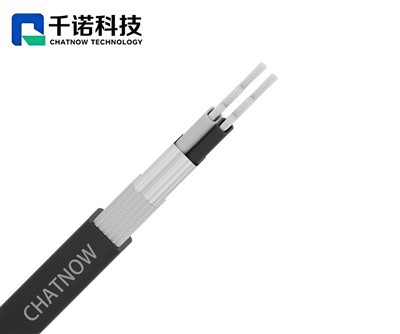
If you’re dealing with intermittent data errors, slow Profibus response times, or suspect attenuation distortion in your network, don’t guess at the solution. Reach out to us to discuss your project, share details about your installation environment, baud rate, and cable length, and we can recommend the right Profibus cable to keep your network running reliably. We don’t cut corners on materials, and every cable we manufacture is tested to meet or exceed Profibus standards, so you can count on consistent signal performance no matter the application.
Flexible Cable References
- International Electrotechnical Commission. IEC 61158-2: Industrial communication networks – Fieldbus specifications – Part 2: Physical layer specification and service definition. Geneva, Switzerland: IEC, 2100.
- Profibus International. Profibus Installation Guidelines: Best Practices for Industrial Network Deployment. Nuremberg, Germany: Profibus International, 2019.
- Johnson, H. W., and Graham, M. High-Signal Transmission Cables. 3rd ed. Hoboken, NJ: John Wiley & Sons, 2010.
- Schneider Electric. Industrial Network Performance: Attenuation and Distortion in Fieldbus Systems. Rueil-Malmaison, France: Schneider Electric, 2021.
Zhejiang Chatnow New Material Technology Co., Ltd.
Zhejiang Chatnow New Material Technology Co., Ltd. is well-known as one of the leading profibus cable manufacturers and suppliers in China, specialized in providing high quality customized service. Please feel free to wholesale high-grade profibus cable at competitive price from our factory.
Address: Building 12, No.9 Huajin Road, ZhouWangMiao Town Innovation Center, Haining, Zhejiang 314400
E-mail: info@chatnow-cable.com
WebSite: https://www.chatnow-cable.com/
