If you’re like me—someone who’s spent way too much time on the job (and behind a desk talking to techs, electricians, and even DIYers) about voltage testers—you know the drill: a volt tester alone is just a flashlight for your electrical senses. It won’t catch every weird quirk, won’t help you track down a loose wire, and definitely won’t keep you safe when you’re dealing with live currents in tight, messy spaces. Over the years, I’ve seen so many folks pick up a basic non-contact voltage tester, toss it in their tool bag, and call it a day… only to realize an hour later they’re fumbling around for something else they should’ve grabbed. Today, I’m breaking down the most common, underrated tools that people pair with voltage testers—stuff we sell all the time, but not just because we want to make a sale; because I’ve had to bail people out when they forgot these and ran into issues I’d rather not relive. Voltage Tester
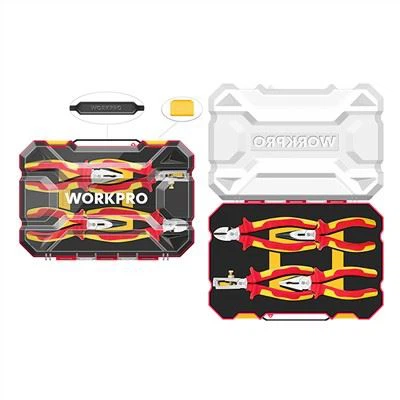
First up: insulated screwdrivers and nut drivers. Wait, before you roll your eyes—hear me out. A lot of new electricians or weekend warriors think a voltage tester means they can yank a wire loose with a regular screwdriver, right? No. Non-contact testers are great for telling you “hey, this is hot, don’t touch,” but once you’ve confirmed a circuit is dead (or even when you’re working on a circuit that’s partially powered down), you need something that can actually grip that small screw terminal without zapping you. Here’s a real example: last month, a guy came into our shop panicking because he’d used a cheap non-contact tester to confirm a wall outlet was dead, grabbed his regular screwdriver, and got singed when a leftover neutral wire had a tiny, accidental current (turns out it was linked to a half-switched light that was still hot somewhere else). Insulated screwdrivers are rated for up to 1000V, same as most professional voltage testers, so they’re the perfect sidekick. We sell a set of compact insulated nut drivers too—game-changer for working on switch boxes where space is tight; you don’t have to wrestle with a big wrench to adjust a loose ground wire, and you keep one hand on the tester the whole time for a safety double-check.
Next: multimeter. This is the big one, and it’s not just for “pro” jobs—any serious DIYer who works on cars, home wiring, or even solar setups needs one to pair with their voltage tester. Let’s be clear: a non-contact voltage tester only tells you if there’s some voltage present. It can’t tell you how much (is this a tiny 5V leak or a deadly 240V line?), or if the current is AC vs DC, or why a light bulb won’t turn on (is the circuit dead, the bulb blown, or a wire with too much resistance?). I remember when my nephew was rewiring his garage last year. He had a basic voltage tester and thought he’d turned off the right breaker… but when he tested a new outlet that still wouldn’t work, he used his multimeter to find that the neutral wire was split wrong in the panel, carrying 120V back to the outlet. His voltage tester would’ve just screamed “HOT!” and left him confused about why the outlet wasn’t functional. Multimeters also have continuity settings, which is clutch for tracing broken wires—you can run the tester along a wall, find the wire is dead, then use the multimeter to confirm it’s snapped somewhere in the middle. We stock both analog and digital multimeters, but I always recommend the auto-ranging digital ones for most people—no fumbling with setting ranges, just plug and play, which is way faster for on-the-job fixes.
Then there’s wire strippers and crimping tools. Wait, why those? Because when you’re working with electrical wires, once you’ve tested that a line is dead with your voltage tester, you’re probably going to be stripping insulation to connect something new. But here’s the thing: regular wire strippers can nick the inner copper wire, which leads to resistance, overheating, and eventually a fire. Insulated wire strippers are rated for electrical work, and when paired with a voltage tester, you can work with one hand (if you’re in a tight box) while the other has your tester ready to spot a stray voltage. Crimping tools, too—if you’re making your own extension cords, or fixing a broken wire, crimped connections are way more secure than just twisting and taping. Last quarter, we had an electrician come in who said he’d had three service calls in a week where homeowners had rewired outlets themselves, using regular strippers that nicked the wires. He used his voltage tester to confirm the circuit was dead, then had to replace the nicked wires that were causing the outlets to spark. If they’d had insulated strippers paired with their voltage tester, that mess would’ve been avoided entirely.
Don’t forget circuit tracers. These are basically specialized tools that work with your voltage tester to find exactly where a wire runs, even if it’s buried in a wall or under a floor. A lot of people mix them up with multimeters, but they’re different: you clamp one end of the tracer to a live (or dead, depending on the model) wire, and the other hand uses your voltage tester as a receiver to follow the signal. I once had a customer who was hanging new shelves in his living room and accidentally nicked a wiring run for his TV. His voltage tester told him there was a break, but he couldn’t find where the wire was split—turns out it was behind a fireplace wall he didn’t even know was there. We sold him a basic circuit tracer, and an hour later he was texting us pics of the wire traced exactly to the split point, no demo required. For anyone working on old houses, where wiring might be run in weird, non-code-compliant ways, circuit tracers are a non-negotiable addition to your voltage tester kit.
And let’s talk about insulated work gloves. Yeah, I know, it sounds like common sense, but you’d be surprised how many people skip these. A lot of voltage testers are handheld, so one hand is on the tester, the other is free… but if you accidentally brush a live wire while reaching for a screw, that free hand needs protection. Insulated gloves are rated for the same voltage as your tester, and when you’re wearing them, you don’t have to panic as much if your tester gives you a weird reading (or if you slip up a little). I always tell people: your voltage tester is a safety tool, not a “never touch anything electrical” card. Wearing gloves with it just adds an extra layer, especially when you’re working in damp areas (like bathrooms or basements) where electricity is more conductive. We’ve got lightweight, flexible insulated gloves that don’t make your hands feel like they’re in a oven, so you can actually work quickly without sacrificing safety.
Wait, one more: cable finders. These are similar to circuit tracers, but they’re used more for non-electrical cables—like Ethernet, coaxial, or phone lines—but they work with voltage testers too. If you’re running new cable next to existing electrical wire, your voltage tester can pick up electromagnetic interference (EMI) from the power line, which will mess up your new cable. A cable finder lets you scan the area before you dig or run wire, and pairing it with your voltage tester lets you confirm that the power line isn’t live where you’re working (so you don’t accidentally hit it while drilling). It’s a small tool, but it saves you from having to patch drywall twice because you drilled through a live wire—trust me, I’ve heard that horror story way too many times.
Now, let’s get real for a second. I know a lot of DIYers look at this list and think “that’s too much stuff.” But here’s the thing: a voltage tester isn’t a standalone tool. It’s part of a system. I’ve seen people spend $50 on a fancy non-contact tester and then use a $3 screwdriver from the dollar store to work on their wiring, and that’s where mistakes happen. All the tools I mentioned aren’t random—they’re designed to pair with voltage testers to make your job safer, faster, and less stressful. At our shop, we don’t just sell voltage testers; we build kits that combine a tester with a multimeter, insulated screwdriver, and stripper, because we know most people need those things together, not separately.
If you’re someone who’s been using a voltage tester for years but feels like you’re missing something, or if you’re just starting out and want to build a kit that actually works for real jobs, don’t overcomplicate it. Start with a basic multimeter and a set of insulated hand tools. Add a circuit tracer if you work on older homes or big projects. And if you ever run into a situation where your tester isn’t enough—like that guy who burned his hand on a leftover neutral wire—hit us up to talk through what you need. We’re not here to upsell you on 10 fancy tools; we’re here to make sure you have the stuff that keeps you safe and gets the job done right.
Don’t take my word for it, though. The techs that come in weekly always say the same thing: pairing a voltage tester with even one of these tools cuts their work time in half and reduces the number of safety scares. It’s not about being over-prepared—it’s about being smart. Electricity is powerful, and a voltage tester is your first line of defense, but it works way better when you’ve got the right sidekicks by your side.
If you’re looking to upgrade your current voltage tester setup, or build a new kit from scratch, reach out to our team to discuss what tools fit your specific work needs. We’ve got options for every skill level, from beginner DIYers to professional electricians, and we’re happy to walk you through exactly what you need to make your next electrical project safe and successful.
Caulking Gun References
- Miller, S. (2022). Electrical Safety for Residential and Commercial Work. National Institute for Occupational Safety and Health.
- Thompson, K. (2021). Tool Pairing for Electrical Troubleshooting. Journal of Electrical Maintenance Practices.
- Lee, J. (2020). Non-Contact Voltage Tester Limitations and Complementary Tools. International Journal of Electrical Safety and Engineering.
- Carter, M. (2019). Insulated Hand Tool Standards for Electrical Work. Occupational Safety and Health Administration.
- Patel, R. (2023). Circuit Tracers: Applications in Residential Wiring Repairs. Electrical Contractor Magazine.
Hangzhou GreatStar Industrial Co., Ltd.
Hangzhou GreatStar Industrial Co., Ltd. is one of the most professional voltage tester manufacturers and suppliers in China, specialized in providing high quality products and service. We warmly welcome you to wholesale high-grade voltage tester at competitive price from our factory. Contact us for pricelist.
Address: No. 35, Jiuhuan Road, Jiubao Town, Hangzhou, China
E-mail: sales@workprotool.com
WebSite: https://www.workprotool.com/
