If you’ve ever stood in your backyard, cranking a rusty manual sprayer handle for 20 minutes straight to coat your vegetable garden with pest repellent or your patio furniture with sealant, you’ve probably daydreamed about swapping that muscle-powered rig for something that works with the push of a button. As a supplier of electric sprayers for over a decade, I get this question all the time: Can I convert my old manual sprayer to electric, instead of dropping cash on a brand-new model? The short answer is yes—sort of—but there’s a lot more to it than just slotting a drill where your hand used to go. Let’s break this down, from the practical science of the conversion to when it makes (or doesn’t make) sense for your needs. Electric Sprayer
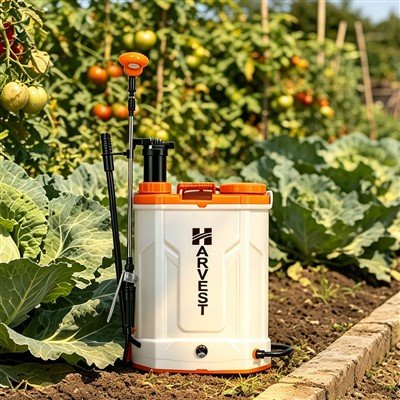
First, let’s ground this in how both types of sprayers work, because the conversion’s feasibility hinges entirely on that core mechanism. A manual sprayer, whether it’s a 1-gallon handheld or a 5-gallon backpack model, relies on a piston pump: every time you push and pull the handle, you force liquid through a one-way valve into the spray wand, and a pressure regulator keeps that liquid consistent enough to spray evenly. Electric sprayers, by contrast, use a small, low-voltage motor (usually between 12V and 24V, depending on the model) to run that same piston pump, or sometimes a diaphragm pump, which is quieter and better for thicker liquids like garden sprays or wood sealers.
For small, lightweight manual sprayers (1-gallon to 2-gallon handheld units), the conversion is surprisingly doable—no fancy engineering degree required. I’ve helped dozens of home gardeners test these DIY setups over the years, and most use a common cordless drill or a small 12V power drill motor as the replacement for the manual handle. Here’s how that works: take the manual piston rod that connects to your handle, remove the handle, and attach a small adapter (you can 3D print this for $5 or buy a pre-made one at most hardware stores) that fits the drill’s chuck. Instead of cranking the handle back and forth by hand, you trigger the drill, and it reciprocates the piston rod automatically. The key here is matching the drill’s speed to the pump’s required stroke rate: too fast, and you’ll burn out the small piston seals in the manual sprayer; too slow, and your spray pressure will be uneven.
But wait—what about backpack manual sprayers, the kind farmers or large property owners use for acres of crops? Those have larger, higher-capacity piston pumps that need more force than a standard cordless drill can deliver. Converting one of these isn’t impossible, but it’s usually not cost-effective for most people. The pump on a 5-gallon backpack manual sprayer can require up to 10 pounds of force per stroke, which would need a 24V battery-powered motor (think a small trolling motor or a power wheelchair motor) and a heavy-duty gearbox to amplify torque. By the time you buy the motor, battery, gearbox, and adapters, you’re already spending $80 to $150—almost half the cost of a basic new electric backpack sprayer from our inventory. That’s where the math stops making sense for DIY conversion.
Now, let’s talk about the parts you’ll need for a successful conversion, because skipping any of these will leave you with a sprayer that sputters instead of distributes evenly. First, the power source: for small handheld sprayers, a 12V cordless drill (any brand, as long as it’s in good working order) is perfect, since it’s lightweight enough to not throw off the sprayer’s balance. If you’re converting a larger sprayer, a lithium-ion battery pack (20V is standard for electric sprayers, and it lasts 2 to 4 hours of continuous use, depending on the model) is better than a lead-acid battery, because it’s lighter and holds a charge longer. Next, the adapter: this is the most critical piece, because the manual sprayer’s piston rod is almost always a custom size, not a universal fit. I’ve seen people try to rig this with duct tape and a metal bolt, and it never works—either the rod slips mid-spray, or it jams, leading to broken seals and wasted chemicals.
You also have to upgrade the pressure regulator, if needed. Manual sprayers are designed to handle the uneven pressure from hand cranking, but an electric motor delivers consistent, steady pressure. That might sound like a good thing, but if your manual sprayer’s seals and wand are rated only for 30 PSI, and your electric motor pushes 45 PSI, you’ll end up with leaks or a wand that sprays so fine it evaporates before it hits your plants. Most new electric sprayers from our team include a pressure regulator that adjusts to your needs, but for DIY conversions, look for a regulator rated for your pump’s maximum PSI—this is a part most hardware stores can cut to fit your sprayer.
Now, let’s cover the common mistakes people make when trying to convert a manual sprayer, because these are the issues that make conversions end up in the trash. First, not accounting for weight balance. A manual sprayer is designed to be held by hand, with the weight distributed around the handle. If you add a 3-pound drill motor to the top, the sprayer will tip back when you trigger it, leading to uneven spraying and sore wrists after 10 minutes. For backpack conversions, this is even worse—adding a heavy motor high on the backpack can throw off your center of gravity, leading to back strain over time. Second, ignoring seal compatibility. Chemicals like neem oil, bleach, or fertilizer have specific pH levels, and manual sprayer seals are often made of natural rubber that breaks down when exposed to constant electric pressure. When converting, swap out the manual seals for food-grade or chemical-resistant seals (Buna-N or Viton are the best options) before you start, otherwise you’ll have a leaky mess after a few uses. Third, underpowering the motor. I once had a customer convert a 2-gallon manual sprayer with a 6V toy drill motor, and it could only spray half as much pressure as a hand cranked version. It was frustrating for him, because he spent $20 on the drill and $10 on adapters, only to have a sprayer that was worse than his original manual model.
So when is a DIY conversion worth it? Let’s do the numbers. A basic 1-gallon handheld electric sprayer from our line costs around $35. If you already have a 12V drill and a few adapters lying around, converting your manual sprayer would cost you less than $10 in seals and small parts, which is a steal. That’s great for occasional users, like someone who sprays their small vegetable garden once a month. But if you use your sprayer 10+ times a week, or for commercial purposes (like a landscaping business), conversion is not the way to go. Our electric sprayers come with a 2-year warranty, a long-lasting lithium-ion battery that charges in 1 hour, and a pressure regulator optimized for common gardening and cleaning chemicals—things you can’t replicate with a DIY conversion.
Another thing to consider: environmental impact, which is a big one for most of our customers. Converting a manual sprayer keeps an old piece of equipment out of a landfill, which is a win for sustainability. But DIY conversions can be wasteful if they break quickly. That’s why we often tell customers: if your manual sprayer is less than 2 years old, and the tank, pump, and wand are in good shape, converting it is a great eco-friendly choice. If it’s 5+ years old, the plastic tank and metal pump are likely already showing wear, and converting it will just delay the inevitable—you’ll still need to replace most parts in a year, making it more wasteful than buying a new electric model.
I should also mention a common alternative to full conversion: semi-electric sprayers. This is a middle ground where you keep the manual handle for low-demand tasks, but add a small electric pump that clips onto the top of the manual sprayer tank. These are perfect for people who don’t want to fully replace their manual rig, and they’re way easier to install than a full piston rod conversion. We sell these semi-electric conversion kits as an option for our customers who want to test electric power without a full purchase. They’re lightweight, attach in 10 minutes, and work great for small gardens or light cleaning tasks.
Let’s wrap this up with a real example from one of our customers last summer. Tom, a homeowner in Ohio, had a 2-gallon manual sprayer he’d used for 5 years to spray his vegetable garden. He didn’t want to spend $40 on a new electric model, so he decided to convert his manual sprayer. He already had a 12V cordless drill at home, so he bought a $3 adapter, $2 worth of Buna-N seals, and a $10 pressure regulator. Total cost: $15, plus a few hours of tinkering on a Saturday. He told us later that it worked better than he expected—he can now spray his entire garden in 10 minutes, instead of 20, and he saved $25 compared to buying a basic electric sprayer. The only issue he had was balance, so he added a small strap to keep the drill secured to the top of the sprayer, which fixed it. That’s the kind of conversion that makes sense.
But for a commercial customer, like a landscaping company that needs to spray 5 acres of lawn every week, conversion isn’t worth it. One of our long-term clients, a small landscaping business in Texas, tried converting two of their 5-gallon manual backpack sprayers last year. They spent $120 total on motors, adapters, and batteries, and within 3 months, both motors had burned out from the constant heavy use. They ended up buying four of our electric backpack sprayers for $180 each, and a year later, they haven’t had a single issue. That’s the tradeoff: DIY conversions work for low-demand, occasional use, but electric sprayers from a reputable supplier are built for consistent, heavy use.

At the end of the day, converting a manual sprayer to electric is possible—but it’s not one-size-fits-all. If you’re a casual gardener with an old manual sprayer in good shape and a drill lying around, give it a shot. Just remember to spend the extra $5 on the right adapter, upgrade the seals, and match your motor’s power to your sprayer’s pump. If you’re a commercial user or someone who uses their sprayer regularly, it’s worth investing in a purpose-built electric sprayer.
Garden Sprayer If you’re curious about what electric sprayer would work best for your needs, or if you have questions about conversion kits, our team is here to help. We work with homeowners, landscapers, and farmers to find the right sprayer for any job, and we can even answer specific questions about retrofitting your existing equipment. Reach out to our team to discuss your needs, and we’ll help you find the best solution—whether that’s a DIY conversion or a new electric sprayer built to last.
References
- Agricultural and Biological Engineering Department, Purdue University. “Pump Technology for Small-Scale Sprayer Applications,” 2021.
- American Society of Agricultural and Biological Engineers. “Standard for Spray Equipment Components: Seals and Pressure Regulators,” ASABE S396, 2020.
- Electric Power Research Institute. “Lithium-Ion Battery Performance for Portable Gardening Equipment,” 2022.
Taizhou Tianyi Agriculture & Forestry Machinery Co., Ltd.
As one of the most professional electric sprayer manufacturers and suppliers in China, our products have good reputation in the market. Please rest assured to wholesale customized electric sprayer made in China here from our factory. If you have any enquiry about quotation, please feel free to email us.
Address: 2988 Binkang Avenue, Taizhou Bay New District, Taizhou, Zhejiang, China
E-mail: info@cnsprayers.com
WebSite: https://www.cnsprayers.com/
