If you’ve ever spent time around a Cat machine—whether it’s a bulldozer powering a construction site, a generator keeping a remote mine online, or a big truck hauling freight cross-country—you know those engines work HARD. I’ve been part of the Caterpillar piston supply game for 8 years now, and one question I get asked more than any other is about piston head temperature. Folks will say, “My Cat engine’s running hot—could my piston be the issue?” or “What temp is too hot for a Cat piston head, anyway?” Today, I’m breaking this down like I would with a guy leaning over my workbench at the shop, no fancy engineering jargon that makes your eyes cross. Let’s dive in. Caterpillar Piston
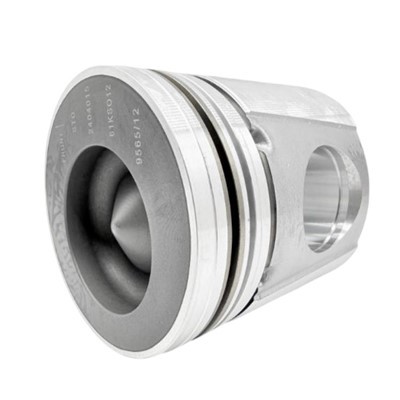
First, let’s get one thing straight: piston head temperature isn’t a random number. It’s tied directly to how the whole engine works, and for Cat engines, those specs aren’t pulled out of thin air—they’re built on decades of testing in the harshest conditions on the planet. When I make a Cat piston for a customer, I’m not just cutting metal and slapping a logo on it. I’m following exact parameters that Caterpillar lays out, because one wrong temp reading can mean a burnt piston, a seized engine, and a very expensive tow bill. The piston head is the part that’s right at the center of the combustion chamber, right? That means it’s taking the brunt of the explosion every time you fire the engine. Fuel ignites, that flame hits the piston head, and the temp spikes fast.
So, what’s the normal operating range for a Cat piston head? From what I’ve seen on thousands of engines, most in-use Cat piston heads run between 250°F and 450°F during normal operation. Wait, that’s a big gap, I know. The thing is, it depends on the load. If you’re idling in the yard, that piston head is hovering around 250-300°F. Floor it with a full load, hauling 80 tons of rock, that temp climbs to 400-450°F. Once I had a customer who was running a generator at a remote mining site, he was complaining his piston head was at 520°F—way too high. Turned out his cooling system filter was clogged, so the piston couldn’t dump heat fast enough. That’s the kind of real-world stuff I deal with every day, not just textbook formulas.
Now, why does piston head temp matter so much? The piston’s made of aluminum alloy, right? It expands when it heats up. If it gets too hot, it expands too much, and it seizes in the cylinder bore. I’ve seen it once: a customer skipped a tune-up, ran his engine in the desert all day, and the piston got so hot it welded itself to the cylinder. He had to haul the whole engine back to the shop in the back of a flatbed—cost him thousands. Too hot also burns the oil. The oil’s supposed to coat the piston and carry heat away, but if the piston head is over 500°F, that oil breaks down, turns into sludge, and stops working. Suddenly you’ve got metal-on-metal contact, and that’s a fast way to ruin a good engine.
But wait—don’t panic if you see a temp reading that’s a little high for a few seconds. Cat engines go through a break-in period when you first start them up, and piston heads can jump to 500°F for a minute or two while everything warms up. That’s normal, as long as it drops back down into that 250-450°F range once the engine’s fully warmed up. I always tell customers to let their engine idle for 5 minutes on cold starts, especially in cold weather, to give the piston time to expand evenly before putting load on it. Skipping that step is a quick way to cause unnecessary stress on the piston.
Now, what’s the biggest factor that affects Cat piston head temperature? It’s not the piston itself, not usually. It’s the cooling system, the fuel injection timing, and how the engine’s being operated. But the piston is a key part of the heat transfer process. A good piston will move heat away from the head fast, and that’s where my job comes in. When I manufacture Cat pistons, I make sure the heat transfer areas—the ring grooves, the oil galleries, the skirt—are precision-machined so they work exactly as they’re supposed to. If a piston’s made poorly, with wrong wall thickness or bad material, it can’t move heat away, and temp spikes. That’s why so many customers come to me after buying cheap replacement pistons that only lasted 100 hours, compared to the 10,000 hours a good Cat piston should run.
I get calls all the time from guys who bought a no-name piston off the internet, and their piston head temp is 100°F higher than it should be. They think the problem is the engine, but it’s the cheap replacement part. I’ll pull up my spec sheet and show them, “Look, Caterpillar’s piston for this engine has a 0.2-inch thick heat dam, that’s why the temp stays down. The cheap one you bought has a 0.1-inch dam, so it can’t block that extra heat.” That’s the kind of detail you only get from a real Cat piston supplier, not some fly-by-night seller who doesn’t know the specs.
Another thing I see a lot: customers who modify their engines, thinking more power is better. They bump up the fuel pressure, add a bigger turbo, and suddenly the piston head temp is through the roof. That’s a bad move, because the piston isn’t built to handle that extra heat. I had a guy last year who modified his 3406 Cat engine, and his piston head hit 550°F. He called me panicking, said he thought he was gonna lose the engine. We went through his setup, and once he backed off the fuel, the temp dropped right back down to normal. If he’d kept pushing, he would’ve blown the piston for sure.
Now, let’s talk about how to check your Cat piston head temp. You don’t need a fancy lab—most modern Cat engines have a digital gauge or a scan tool that reads piston temp. If you don’t have that, a good infrared thermometer works, just point it at the top of the piston through the spark plug hole or the cylinder head access port (make sure the engine’s off and cool before you do that, though). I always tell customers to check the temp when the engine’s under full load, not just idling. Idle temp is nice, but you wanna see how it runs when it’s working, because that’s when the heat is at its worst.
What are the signs your Cat piston head temp is too high? Besides the gauge reading over 450°F under load, you’ll see white smoke coming out of the exhaust, a knocking sound from the engine, or oil that looks burnt or gritty. If you notice any of those, don’t keep running the engine—pull over, let it cool down, and check it out. The problem could be as simple as a clogged radiator, or it could be a worn piston, but either way, catching it early saves you a ton of money.
As a Cat piston supplier, I’ve seen every scenario: from guys who take care of their engines and get 15,000 hours out of a set of pistons, to guys who cut corners and need a replacement piston every year. The biggest mistake I see is not paying attention to piston head temp. It’s the engine’s early warning system, and if you ignore it, you’re asking for trouble.
Let me wrap this up with a few takeaways that I pass along to every customer. First, normal Cat piston head temp is 250-450°F under load. Second, anything over 500°F is a red flag—don’t keep running the engine. Third, most high temps aren’t the piston’s fault, but a bad piston will make it worse. Fourth, buy from a real Cat piston supplier, not a cheap knockoff seller. And fifth, check your piston temp regularly, especially before big jobs, to catch problems early.
If you’re a Cat engine owner, operator, or fleet manager, and you have questions about piston head temp, need a replacement piston that meets Caterpillar’s exact specs, or just wanna make sure your engine is running at its best, hit me up. I’ve spent 8 years learning the ins and outs of Cat pistons, and I’m here to help you avoid downtime and costly repairs. You work hard for your money, so your engine should work as hard as you do. Don’t let a piston head temp issue leave you stranded on the job site. Reach out anytime to talk through your needs.
Caterpillar Piston References:
- Caterpillar Inc. (2019). Engine Piston Design and Performance Specifications for On-Highway and Off-Highway Applications. Cat Technical Publications.
- Heywood, J. B. (2018). Internal Combustion Engine Fundamentals (2nd ed.). McGraw-Hill Education.
- Society of Automotive Engineers (SAE). (2021). Thermal Management of Reciprocating Engine Components. SAE International.
- Cat Maintenance Manual Series 3000-3500 Engines. (2020). Caterpillar Inc.
Hebei Yuwei Piston Co., Ltd.
As one of the most professional caterpillar piston manufacturers and suppliers in China, we’re featured by quality products and good service. Please rest assured to buy customized caterpillar piston made in China here from our factory. Also, quotation is available.
Address: Beizhujiacun Village, Sujiuzhuang Town, Ningjin County, Xingtai City, Hebei Province
E-mail: Andy@ywpiston.com
WebSite: https://www.ywpiston.com/
