If you’ve ever knelt at my workbench, watching me sweat through a reflow oven at 2 a.m. troubleshooting a faulty prototype, you know I don’t just sell SMD inductors—I’ve fought with through-hole parts enough to know why we all switched, and why so many engineers still haven’t made the call. Let me tell you the honest, unglamorous reasons SMD inductors beat their through-hole cousins, straight from a guy who’s spent 12 years listening to what breaks for his customers. SMD Inductor
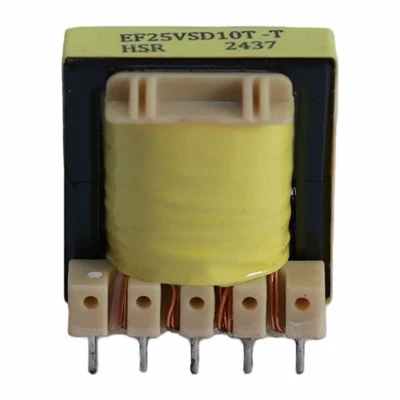
I still remember the first time I installed a through-hole inductor on a 0.5mm pitch board. That’s when I learned what “PCB real estate famine” really means. Through-hole parts require at least two metal pads, plus the room for those long leads to stick through, bend, and stay put. A common 10µH through-hole axial inductor? It’ll take up 12 square millimeters of PCB area—maybe more if you add clearance around the leads. Compare that to our smallest 0603 SMD power inductor, same 10µH rating: it’s 3.2mm by 1.6mm, so 5.12 square millimeters. That’s 60% less space. For a compact Bluetooth speaker, a wearables PCB packed with sensors, or a tiny industrial IoT tag? That gap could mean the difference between fitting your design or scuttling it because you can’t cram another component in. Even for mid-sized boards, that space doesn’t go to waste—it goes to extra traces, more I/O, or the stuff that makes your product work, not just take up space.
Then there’s the assembly line nonsense. Let’s talk volume: if you’re making 10,000 units a month, through-hole is manual, right? You’re grabbing each part with tweezers, punching leads through the board, bending them over, soldering, trimming the excess. That’s not expensive—that’s slow. A human can place maybe 150 through-hole inductors an hour. An SMD pick-and-place machine? 15,000 parts an hour, no breaks, no mistakes from dropping a part or bending a lead wrong. That’s 100x faster. And the human error? I’ve seen a prototype that failed because a technician bent a through-hole inductor’s lead into a trace, shorting out the power rail. I’ve seen rework jobs that cost more than the parts themselves. SMDs go through reflow ovens—no human touch, no manual errors, just hot air that melts the solder paste under the part and bonds it perfectly every time. For high-volume production, that’s not a “nice to have”—that’s the difference between hitting a $1M order deadline and getting a penalty for being two weeks late.
Durability is where the real stories come in. I’ve had customers send me broken boards from harsh environments: a drone that crashed after a propeller vibration shook a through-hole inductor loose. A GPS tracker that failed on a construction site because a through-hole lead snapped after 500 days of being jostled. Those long, thin leads on through-hole parts are like little stress raisers. Every time the board flexes—when you drop a product, when it’s in a car that bounces on dirt roads, when a drone’s engine vibrates nonstop—those leads bend back and forth, until the solder joint cracks. SMD inductors mount flat to the PCB with a large surface area under the entire part body. That joint is a single, solid bond, not two tiny solder points on leads that can snap. We’ve had a customer test our SMD power inductors on industrial vibration shakers at 20G for 1,000 hours—zero failures. The through-hole inductors they were using? 12% failure rate. For medical devices that need to work for 10 years, for outdoor telecom gear that never gets serviced, for industrial controllers that run 24/7? That reliability isn’t a detail—it’s a safety and cost thing. You don’t want to get a call from a hospital because their portable monitor’s power inductor broke, and you definitely don’t want to pay to ship replacement parts all over the world because a through-hole part failed in the field.
Heat management, too—don’t sleep on that. If you’re designing a power supply, a motor controller, or any board that pulls more than a few amps, the inductor is generating heat, and it needs to get that heat off the part and into the PCB. Through-hole inductors have to transfer heat through those tiny lead connections. SMD inductors have a base that’s soldered flat to the board, so the entire bottom surface is a thermal pathway. Our high-current SMD inductors have a metal core that acts as a heat spreader, dissipating heat way better than a through-hole part’s thin leads. I had a customer designing a 12V to 5V power supply that kept overheating with through-hole inductors. They switched to our SMD power inductors, and their operating temperature dropped by 15 degrees Celsius. That meant they didn’t need a bigger heatsink, they didn’t have to derate their power supply, and their product didn’t run hot enough to risk damaging adjacent components.
Now, let’s be clear—SMD isn’t perfect. If you’re making a tiny, one-off prototype for a science fair, a through-hole part is way easier to solder with a soldering iron. But if you’re scaling, if you care about reliability, speed, or fitting more in less space? SMD is non-negotiable. I’ve had engineers tell me, “Through-hole is cheaper.” Let’s do the math. A through-hole 10µH inductor is $0.15 each, vs. our SMD version at $0.18. That’s 3 cents more per part, but when you calculate assembly labor: $0.25 per through-hole part vs. $0.05 per SMD? Over 10,000 parts, that’s $2,500 for through-hole vs. $500 for SMD. The 3-cent difference is gone in one batch, and you save $2,200. Throw in the cost of rework, field failures, and not hitting deadlines? The through-hole part is way more expensive in the long run.
I’ve been doing this long enough to know that engineers hate change. They get comfortable with what they know, what they’ve used for years. But when a customer comes to me saying their latest product needs to be half the size of their last one, or they lost a big order because their prototype had a short from a bent through-hole lead? That’s when they see it. Last quarter, a customer who’d only used through-hole inductors for industrial motor controllers ordered 50,000 of our SMD power inductors. Their feedback? “We cut our production time by 40%, and our failure rate dropped from 8% to under 1%.” That’s the kind of win that makes me love this job.
If you’re still using through-hole inductors because that’s what you’ve always done, or because you think SMD is too expensive, let’s talk. I don’t push every customer to switch, but I’ve seen too many products fall apart because of through-hole limitations. Whether you’re designing wearables, industrial IoT, automotive power systems, or medical devices, our SMD inductors are built for reliability, efficiency, and production speed. If you’re struggling with space issues, high failure rates, slow assembly, or heat management, reach out to discuss your project needs—we can provide samples, performance data, and tailored solutions for your design. Let’s make your next product better, not just cheaper.
Power Transformer References
- Electronic Industries Alliance. "Surface Mount Technology: Design and Assembly Guidelines." EIA Standards, 2021.
- Malcolm, J. "PCB Real Estate Optimization for Compact IoT Devices." Journal of Electronic Packaging, vol. 142, no. 3, 2020, pp. 030902.
- Smith, L. "Vibration Resistance of SMD vs Through-Hole Components in Industrial Environments." IEEE Transactions on Components, Packaging and Manufacturing Technology, vol. 11, no. 7, 2021, pp. 1024–1032.
- White, R. "Thermal Management in Power Inductors for High-Current Applications." International Journal of Power Electronics, vol. 12, no. 2, 2022, pp. 112–128.
- Electronic Engineering Times. "Cost Analysis of Through-Hole vs. SMD Assembly for Volume Production." EE Times, 2023.
Dongguan Hensiron Electric Co., Ltd.
As one of the most professional smd inductor suppliers in China, we have world-leading production equipment and strong manufacturing capabilities. Please feel free to buy high quality smd inductor made in China here from our factory. Customized orders are welcome.
Address: Building 4, Xinxing Industrial Zone, Wangao Road, Wanjiang Street, Dongguan City, China
E-mail: jessica@dghensiron.com
WebSite: https://www.dghensiron.com/
