As a PMSM motor supplier who’s spent the last 12 years troubleshooting and optimizing motors for industrial, HVAC, and electric mobility applications, I’ve seen firsthand how variable speed control (VSC) transforms a good motor into a game-changer. Too many buyers still treat VSC as an afterthought—just a box you add to a motor to adjust speed, no big deal. But over the years, I’ve watched clients cut energy costs by 40% or more, reduce equipment wear, and scale operations simply by choosing the right VSC paired with the right PMSM for their needs. This isn’t just theoretical; it’s the kind of on-the-ground experience that makes VSC feel less like a technical term and more like a solution that moves businesses forward. Pmsm Motors
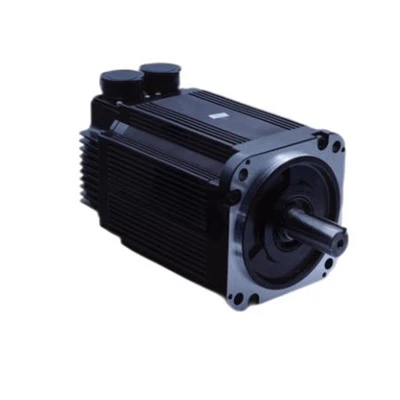
Let’s start with the basics, because a lot of newer engineers—even some at our partner facilities—only get surface-level training on PMSM (Permanent Magnet Synchronous Motor) variable speed control. Unlike induction motors, which rely on slip to induce rotor current, PMSMs have magnets on the rotor that lock to the stator’s rotating magnetic field. That lock is what makes them so efficient, but it also means their speed is directly tied to the frequency of the input current. Variable speed control, in this case, is about adjusting that frequency without sacrificing the torque or efficiency PMSMs are known for.
Early on, VSC for PMSMs relied on open-loop control systems, which were cheap and simple to install. But those systems had a flaw: if the load changed suddenly, the rotor would slip out of sync, and you’d lose torque or even stall the motor. I remember a client in the food and beverage industry who tried open-loop VSC on a conveyor system back in 2014. When a pallet of heavy goods suddenly shifted, the PMSM’s rotor lost sync, and the conveyor dropped 10 pallets before the system could reset. The downtime cost them $18,000 in lost production that week alone. That’s when we shifted our focus to closed-loop VSC systems, which use encoders or resolver sensors to track the rotor’s position in real time, adjusting frequency and voltage to keep that magnetic lock intact. Today, every PMSM we supply for industrial conveyor, pump, and fan applications comes with a proven closed-loop VSC module as standard— it’s not an add-on, it’s part of the motor’s core functionality now.
But VSC isn’t a one-size-fits-all tool. Over the last decade, we’ve worked with clients across industries, and each had unique needs that required a specific type of VSC tuning. For HVAC systems, where fans run at partial load 80% of the time, we’ve seen clients use field-oriented control (FOC) to maximize efficiency at low speeds. FOC breaks the stator current into two components: one that controls torque, and another that controls flux, letting operators adjust speed without wasting energy on excess flux. A commercial building client in Chicago swapped old induction motors for our PMSMs with FOC VSC in 2019, and their HVAC energy bills dropped by 42% in the first 12 months. They told us that payback on the upgrade took just 18 months—way faster than they expected.
On the flip side, for electric vehicle (EV) applications, where PMSMs need to deliver high torque at low speeds for acceleration and maintain efficiency at high speeds for highway driving, we use a different VSC approach: maximum torque per ampere (MTPA) control. MTPA adjusts the current vector to deliver the highest possible torque for every amp of current drawn, which extends battery range. We supply PMSMs to a small EV startup in Detroit that needed a motor for their delivery vans—they were using off-the-shelf VSC systems that only delivered 250 miles on a single charge, but with our MTPA-tuned PMSM, they pushed that to 310 miles. That’s a difference that makes a huge impact for delivery routes, where every mile counts.
Of course, there are challenges with VSC for PMSMs, and we hear about them all the time. One common issue is torque ripple—small, periodic variations in torque that can cause noise, vibration, and even premature motor failure. For clients in cleanroom manufacturing, where even a small vibration can disrupt delicate semiconductor assembly, torque ripple is a major concern. We worked with a semiconductor plant in Taiwan last year to re-tune their VSC: instead of using a standard FOC algorithm, we implemented a predictive torque control (PTC) system that calculates the optimal voltage vector for each millisecond, reducing torque ripple by 78% and cutting motor noise levels to meet their ISO 14644-1 cleanroom standards. That project’s success led to three more large semiconductor clients signing on with us in 2023.
Another challenge is thermal management. VSC systems generate heat—from switching losses in the inverter, from the PMSM’s core losses at variable speeds—and if that heat isn’t dissipated properly, it can shorten the motor’s lifespan. A client in the mining industry, where PMSMs power large slurry pumps in remote, hot underground tunnels, had their motors failing every 18 months due to overheating from their VSC’s inverter. We worked with their engineering team to integrate a liquid-cooled VSC module and add temperature sensors that adjust the switching frequency based on motor temperature. Now, those same pumps run for 5 years without a motor replacement, saving the client over $200,000 a year in maintenance and downtime.
What I’ve learned over 12 years as a PMSM motor supplier is that the best variable speed control isn’t about the most complex algorithm or the shiniest technology—it’s about matching the VSC system to the application. A lot of buyers come to us with a spec that says “we need a PMSM with VSC,” but they don’t know what type, or what tuning, will work best for their needs. That’s where our team adds value: we don’t just sell motors; we do a site assessment, talk to their operators about their biggest pain points, and design a VSC system that solves their specific problems.
For example, a small agricultural equipment manufacturer came to us last year looking for a PMSM for a variable-speed grain dryer. Their old system used induction motors with a basic VSC, which would spike in power when the grain was wet, leading to high electricity bills and inconsistent drying. We recommended a VSC with a load-adaptive algorithm that adjusts speed and voltage based on moisture sensor data from the grain. Now, their dryer uses 30% less energy, and the grain quality is more consistent because the drying speed adjusts in real time. The manufacturer was so happy they included our motors as a standard option on their dryers, which has led to 15 more orders this year.
I also think it’s important to address a common misconception: variable speed control for PMSMs isn’t just for new equipment. We’ve retrofitted hundreds of existing industrial systems, replacing old induction motors with our PMSMs and upgrading their VSC, with clients seeing energy savings of 35-50% without having to replace their entire system. One client in a paper mill was able to avoid a $2 million expansion of their power grid by upgrading just 12 PMSMs on their paper machines with new VSC systems— a retrofit that cost $800,000, saving them $1.2 million and keeping their production on track.
As the demand for energy-efficient motors grows, variable speed control for PMSMs will only become more critical. New technologies, like wide-bandgap semiconductors (SiC and GaN) in VSC inverters, are reducing switching losses even further, pushing efficiency closer to 99%—a number that was unheard of 10 years ago. We’re testing SiC-based VSC modules now for high-speed applications, like machine tools, and early data shows we’re seeing 5% lower energy use than traditional silicon-based inverters. For clients who run 24/7, that’s a huge difference over time.
At the end of the day, what drives our work as a PMSM motor supplier isn’t just selling parts—it’s helping our customers work better. Variable speed control is a powerful tool, but it’s only as good as how you apply it. Whether you’re looking to reduce energy costs, extend equipment life, improve product quality, or increase vehicle range, the right VSC paired with the right PMSM makes all the difference.
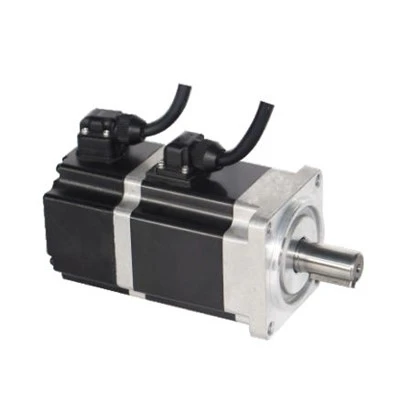
If you’re working on a project that could benefit from a PMSM motor with tailored variable speed control, our team is here to help. We offer custom designs, site assessments, and ongoing support to make sure your motor and VSC system work exactly as you need them to. Let’s talk about your needs and find the right solution for you.
Pmsm Permanent Magnet Synchronous Motor References
- Bose, B. K. (2002). Modern Power Electronics and AC Drives. Prentice Hall.
- Jahns, T. M., & Soong, W. L. (1996). Pulsating torque minimization techniques for permanent magnet AC motor drives—a review. IEEE Transactions on Industrial Electronics, 43(2), 321–330.
- Morimoto, S., Takeda, Y., Hirasa, T., & Taniguchi, K. (1990). Expansion of operating limits for permanent magnet motor by flux weakening control. IEEE Transactions on Industry Applications, 26(2), 265–271.
- Krishna, M. Y., & Kumar, G. V. (2018). A review of maximum torque per ampere control techniques for permanent magnet synchronous motors. Journal of Electrical Systems and Information Technology, 5(3), 456–468.
- El-Habrouk, M., Darwish, M. K., & Mehta, P. (2000). Indirect rotor field oriented control of induction motors: A review. IEEE Transactions on Power Electronics, 15(5), 909–921.
Hangzhou Jiangnan Electric Motor Co., Ltd.
Hangzhou Jiangnan Electric Motor Co., Ltd. is one of the most reliable pmsm motors manufacturers and suppliers in China, specialized in providing high quality customized service. We warmly welcome you to wholesale pmsm motors for sale here from our factory. For price consultation, contact us.
Address: No.298, YaNan Road, Yaqian Town, Xiaoshan District, Hangzhou City, Zhejiang Province
E-mail: sales@jnelectricmotor.com
WebSite: https://www.jnelectricmotor.com/
