If you’ve ever walked through a commercial building’s mechanical room, a university’s electrical utility closet, or a manufacturing plant’s production floor, you’ve probably seen stainless steel cable tray—those sleek, open frames that hold power and data cables neatly off the ground. As a supplier of stainless steel cable tray, one question crosses almost every potential customer’s mind when they’re designing a system: “What’s the weight of a stainless steel cable tray, and why does it matter?” It’s not just a number scribbled on a spec sheet; it’s a detail that affects installation, structural load, long-term maintenance, and even project budgets. Let’s break this down like we do with every client who walks through our door or sends an email asking for a quote. Stainless Steel Cable Tray
First, let’s get one thing straight: there’s no single “one-size-fits-all” weight for a stainless steel cable tray. The weight depends on three core factors: the tray’s size (width and length), its material grade, and its type. Let’s start with the basics of how cable tray is constructed. Unlike solid metal conduits that enclose cables, cable tray is a support system that acts as a framework—think of it as a shelf for cables, slotted with rungs or perforations to let heat escape and make installation easy. The more rigid the tray needs to be, the thicker its metal walls, and the heavier it becomes.
Let’s talk material grade first, because that’s where a lot of first-time buyers get confused. We supply two primary stainless steel grades for cable tray: 304 stainless steel and 316 stainless steel. 304 is the workhorse of our inventory—it’s 18% chromium and 8% nickel, which gives it great corrosion resistance for most indoor environments, like office buildings, hospitals, and data centers. 304 has a density of approximately 7.93 grams per cubic centimeter, or 0.286 pounds per cubic inch. That’s the baseline for most of our standard product lines. Then there’s 316 stainless steel, which adds 2% molybdenum. That makes it far more resistant to harsh chemicals, saltwater, and high-humidity environments—like coastal construction sites, food processing plants, or chemical manufacturing facilities. The downside? 316 is slightly denser, at about 8.01 grams per cubic centimeter, or 0.289 pounds per cubic inch. So a tray made from 316 will weigh roughly 2–3% more than the same exact tray made from 304. It’s a small difference, but when you’re ordering hundreds of feet of tray, that adds up.
Next, the size. Let’s use our standard ladder-type cable tray as an example—this is the most common type, with horizontal side rails and evenly spaced rungs between them. A 4-inch wide, 10-foot long 304 stainless steel ladder tray, for instance, weighs about 8.2 pounds per section. That’s light enough that one person can carry and install it without extra lifting equipment. But bump the width up to 12 inches, same length, and it jumps to 16.5 pounds. Why? Wider trays need thicker side rails to support more cables without sagging. A 24-inch wide section of the same length? That’s 31 pounds. And if we go to a heavy-duty version of that 24-inch tray—for carrying extra-thick power cables that pull more on the tray’s rungs—we’re looking at 38 pounds per section. It’s a linear relationship for most standard sizes: as the tray’s width increases, weight increases, and as length increases, weight increases too, but only if you’re talking about the same cross-sectional design. A 20-foot long section of that same 12-inch wide ladder tray will weigh roughly 33 pounds, vs. 16.5 for the 10-foot version.
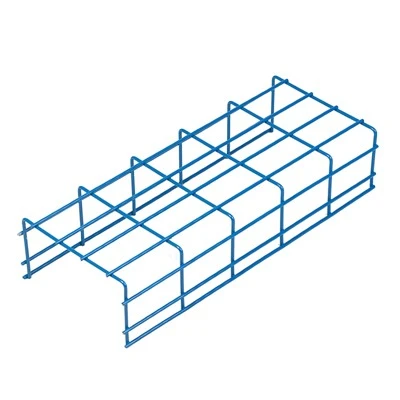
Then there’s tray type, which changes everything. We also supply perforated cable tray, solid bottom cable tray, and wire mesh cable tray, each with different weights. Perforated tray has small holes all along its base, which is ideal for outdoor installations where rain or debris needs to drain through—but it’s lighter than ladder tray of the same size, because there’s less solid metal. A 12-inch wide, 10-foot long perforated 304 tray weighs about 11 pounds, vs. 16.5 for the ladder type. Solid bottom tray is the heaviest of the bunch, because its entire base is a solid sheet of stainless steel—used for environments where cables might be damaged by falling debris or need extra protection from moisture. That same 12-inch solid bottom tray? It’s 22 pounds per 10-foot section. Wire mesh tray, which is popular for data centers and commercial wiring, falls somewhere in between, at about 13 pounds for that same size.
Now, why does this weight matter? A lot of first-time customers might brush it off as a trivial detail, but here’s the thing: structural load is a make-or-break part of any commercial or industrial building’s design. Every ceiling, wall, or floor that supports cable tray has a maximum weight capacity—engineers calculate this as dead load (the weight of the tray itself) plus live load (the weight of the cables it will hold). If you miscalculate the dead load by underestimating your tray’s weight, you could end up with a system that sags over time. Sagging cable tray puts extra strain on cable connections, can cause cables to come loose, and even violates building codes in some regions. That’s why we always ask clients to share their intended cable load and installation location before we recommend a tray—so we can point them to a weight range that’s both safe and cost-effective.
For example, a client building a grocery store in a coastal town reached out last year. They initially ordered 304 stainless steel ladder tray for the entire electrical system, but we flagged that their deli and seafood sections have high humidity and occasional exposure to saltwater (from cleaning supplies). 316 would be better for corrosion resistance, and we also warned them that 316 is slightly heavier. We helped them adjust their hanger spacing (the brackets that hold the tray to the ceiling) to accommodate the extra weight, so they didn’t have to install heavier brackets that would have inflated their project cost. That’s the kind of hands-on guidance we provide, not just selling trays out of a catalog.
Another common question we get: can you calculate the total weight of a custom cable tray run? Yes, and we do it all the time. Let’s say a customer needs a 150-foot run of 8-inch wide heavy-duty 304 stainless steel ladder tray, plus 20 fittings (elbows, tees, reducers) to turn corners and connect segments. The tray itself weighs roughly 11 pounds per 10-foot section—so 150 feet is 15 sections, 15 x 11 = 165 pounds. The fittings add another 40–50 pounds, depending on their size. Total weight for the entire run is around 210–220 pounds. That’s important for shipping, too—if the run is going to a remote construction site, the shipping cost is based on weight, so knowing that number upfront helps clients budget accurately.
We also do custom tray designs, which sometimes have unique weight considerations. For instance, a wind farm client last year needed a tray that could withstand extreme temperature swings and hold 2-inch diameter power cables across 500 feet of elevated outdoor piping. Their initial design called for a standard heavy-duty tray, but our engineering team adjusted the side rail thickness by 1/16 of an inch—adding just 7 pounds per 10-foot section, but making the tray rigid enough to resist sagging in the high winds at the farm’s remote location. That small weight adjustment was a big win for them; they avoided a potential structural failure and didn’t overpay for extra material they didn’t need.
Let’s clarify a common myth some customers have: stainless steel cable tray is heavier than aluminum tray, which is why some might consider aluminum for lighter-duty applications. But stainless steel’s weight comes with a big payoff in durability. Aluminum tray is lighter, but it’s more prone to corrosion in harsh environments—if you’re in a coastal area, aluminum will rust within a few years, while 304 stainless steel can last 20+ years, and 316 can last even longer. For clients who plan to keep their building or facility for decades, the extra weight upfront translates to less maintenance and fewer replacements down the line. That’s a trade-off we always discuss with clients, especially those comparing stainless steel to other materials.
Now, how do we present weight specs to our clients? Every product page on our company’s (unnamed) website lists weight per foot and per standard 10-foot section for every tray type, size, and grade. We also provide free custom weight calculations when a client sends us their project details—no hidden fees, no fine print. A lot of suppliers will just send a price quote without sharing weight, but that’s a mistake. We’ve seen clients run into delays mid-install because they didn’t account for the tray’s weight, had to rush-order heavier hangers, and missed their project deadline. We work hard to avoid that.
If you’re currently planning a cable tray installation, here’s a quick checklist to keep in mind when it comes to weight: first, confirm your environment’s corrosion risk—if it’s indoor or low-humidity, 304 is fine; if it’s outdoor, coastal, or near chemicals, go with 316. Second, calculate your total cable load (not just the tray size) to pick a tray with enough load capacity, which will tie directly to the tray’s weight. Third, don’t forget to include fittings in your weight calculation—elbows and tees add extra pounds that can be easy to overlook.

At the end of the day, a stainless steel cable tray’s weight isn’t just a number—it’s a critical part of designing a safe, long-lasting, cost-effective cable system. As a supplier, our job isn’t just to sell you a tray; it’s to guide you through every detail, from material grade to weight, so your installation goes smoothly. If you’re ready to start planning your project and need accurate weight info, or you have questions about which tray type is right for your space, don’t hesitate to reach out and connect with our team for a tailored quote. We’re here to help make your cable tray project as stress-free as possible.
Aluminum Cable Tray References
- National Electrical Manufacturers Association (NEMA). 2022. “Cable Tray Standards and Specifications for Industrial and Commercial Applications.”
- American Society of Mechanical Engineers (ASME). 2021. “Material Properties for Stainless Steel Alloys in Construction Applications.”
- Underwriters Laboratories (UL). 2020. “Safety Standards for Cable Tray Systems and Structural Load Calculations.”
Hebei Jinglang Industrial Co., Ltd.
As one of the most professional stainless steel cable tray manufacturers and suppliers in China, we also support customized service. We warmly welcome you to wholesale high quality stainless steel cable tray in stock here from our factory. If you have any enquiry about quotation, please feel free to email us.
Address: Nanxinzhuang Village, Daweihe Hui and Manchu Township, Wen’an County, Langfang City, Hebei Province
E-mail: wei32830@gmail.com
WebSite: https://www.jinglangcabletray.com/
