When it comes to cutting tight curves in wood, plastic, or even thin metal, there’s a lot of debate in the hobbyist and professional woodworking communities about which saw is better: a waist saw or a coping saw. As someone who’s spent years supplying waist saws to workshops and small manufacturing shops, I’ve tested both tools extensively, and I’m here to break down the science, the hands-on differences, and when each one shines. Spoiler alert: it’s not always a one-size-fits-all answer, but if you’re dealing with super tight curves, one tool has a clear edge. Waist Saw

First, let’s get clear on what each saw actually is, because a lot of people mix them up. A waist saw—sometimes called a frame saw, but waist saw is the common term in many woodworking circles—has a thin, narrow blade (usually 1/8-inch to 1/4-inch wide) stretched tight in a rectangular frame. The key here is the blade’s thickness and the way it’s mounted: it’s held taut along its entire length, so it doesn’t flex when you push or pull it. A coping saw, on the other hand, has a much thinner blade (like 1/16-inch, sometimes even narrower), but it’s mounted in a U-shaped frame that lets you adjust the blade’s orientation. Wait, no—wait, actually, the big difference is the blade’s rigidity and frame design. Coping saw blades are super thin, but they’re only supported at the top and bottom of the U-frame, so they can twist and flex more easily. That’s a point I see a lot of beginners miss when they’re choosing a tool for curve cutting.
Let’s talk about tight curves specifically. A tight curve is usually defined as a radius of 1 inch or less—think of the curved edges on a small jewelry box, a musical instrument’s body, or a custom sign with tight scrollwork. For these cuts, you need a saw that can make sharp turns without wandering, and without the blade bending so much that it binds or breaks. Let’s do a quick physics check here: blade width is a big factor for turning. The narrower the blade, the smaller the radius of curve it can handle, right? But wait, if a blade is too thin, it’s flexible. So there’s a balance between width (for control) and rigidity (for not flexing).
I’ve watched new woodworkers grab a coping saw for a tight curve and run into all kinds of issues. Because the coping saw’s blade is thin and only mounted at two points, when they try to turn a sharp corner, the blade twists. Instead of making a clean 90-degree turn, it drifts, creating a wobbly edge or even cutting the wrong part of the wood. I had a customer last month who was making a set of wooden coasters with scalloped edges—he tried his coping saw, and every other curve ended up uneven. He switched to a waist saw from our inventory, and the difference was night and day. The waist saw’s blade is thicker (still narrow, around 3/16-inch for curve work) and held taut in a rigid frame, so it doesn’t twist. It follows the line perfectly, even on a 3/4-inch radius.
But wait, is the coping saw never good? No, not at all. If you’re cutting slightly larger curves—radius of 2 inches or more—and you need a blade that can turn really easily because you’re working in a tight space (like inside a box joint), the coping saw might be better. Because its blade is thinner, it can maneuver in smaller internal spaces than a waist saw, which has a frame that’s a bit bulkier. But for tight curves on the outside edge of a piece, or for curves that need precision, the waist saw wins.
Another thing to consider: blade tension. A lot of people think a coping saw’s blade is easier to tension, but that’s not always the case. Waist saws use a wingnut to adjust the blade’s tension, and if you get it right, the blade is so tight it doesn’t vibrate at all while cutting. I’ve seen woodworkers over-tension a coping saw, and the blade snaps immediately—they under-tension it, and it twists. With a waist saw, once you get the tension set, it’s consistent, so your cuts stay straight along the curve.
Let’s talk about material compatibility too. If you’re cutting softwood (pine, balsa), both saws work, but if you’re cutting hardwood (oak, maple), the waist saw’s thicker blade stands up better to the denser material. The coping saw’s thin blade can bind in hardwood, especially on tight curves, because the wood fibers are harder to push through without the blade flexing. Our waist saws are made with high-carbon steel blades, which hold an edge longer and resist bending, even when cutting hardwood curves. I’ve tested this with a customer who was making custom wooden guitar necks—he was using a coping saw before, and the blade would break every few cuts on the maple body. Switched to a waist saw, and he went a full 8 hours of cutting tight curves without replacing a blade. That’s a big win for productivity.
Wait, I should address a common myth: some people say the coping saw is better for scrollwork, which is super tight, intricate curves. But scrollwork usually has gaps, right? If you’re cutting internal scrolls—like a letter in a sign, where you have to cut out the inside part—you need to start with a pilot hole. Here, the coping saw’s thin blade is better because you can thread the blade through the pilot hole without the frame getting in the way. Oh, that’s a key point I almost missed! So it’s not that the coping saw is bad, it’s that the application is different. If you’re doing external tight curves (the edge of a sign, a tabletop), waist saw is better. If you’re doing internal scroll cuts, coping saw works better because you can maneuver the blade through small holes. That’s a mistake a lot of buyers make—they think “tight curves” means all curve work, but internal vs external is a huge distinction.
I’ve been supplying waist saws for over 10 years, and I’ve had customers come to me saying they switched from coping saws because of inconsistent cuts. One guy was making wooden toys for a craft fair, and his coping saw cuts were so uneven that half his inventory was rejected. He tried our waist saw, and every piece was perfect—he’s been a repeat customer ever since. What I tell people is: match the saw to the job, but if your job is tight external curves (radius under 1 inch), go with a waist saw. It’s more stable, less likely to bind, and gives a cleaner cut.
Another factor: user fatigue. Coping saws have a U-frame, so your hand is positioned differently, and the blade’s flex means you have to apply more pressure to cut through the material. Waist saws have a straight frame, so you can use your whole arm to apply even pressure, and the taut blade cuts through smoothly without extra force. I’ve talked to professional woodworkers who do curve cuts all day, and they say using a coping saw for hours leads to hand cramps, while a waist saw is more comfortable. That’s a big deal for anyone doing production work, not just a hobbyist making one project.
Let’s do a side-by-side test I did last year to prove this. I cut two pieces of 1/4-inch maple, each with a 3/4-inch radius curve. First with a coping saw: I had to adjust the blade tension three times during the cut, the blade twisted twice, and the edge had a slight wobble that I had to sand off. That added 5 minutes of work to each piece. Then with a waist saw: tensioned once, cut the curve in 2 minutes, edge was perfect, no sanding needed. The difference was clear. Now, if that was a large production run of 100 pieces, that’s 300 minutes saved from sanding, plus the initial cut time. That’s why professional shops swear by waist saws for tight external curves.
Wait, what about thin materials, like balsa wood for model airplanes? A lot of model builders use coping saws, but I’ve found that a waist saw with a fine blade (our 1/16-inch blade, actually—we make those too) works just as well, and the cuts are more precise. The key is the blade’s rigidity. Even on thin material, a taut blade doesn’t flex, so the curve is exactly what you traced. I have a model airplane builder who uses our waist saw for all his wing curves, and he says it’s way better than his old coping saw for getting the aerodynamic shapes right.
So why is there so much confusion about this? A lot of older woodworking books don’t clearly distinguish between internal and external curves. They just say “coping saw for curves” without noting the size or if it’s internal. That’s where I try to educate people as a waist saw supplier—we don’t just sell tools, we help people pick the right one for their specific job.
Let me wrap this up. If you’re cutting tight external curves (radius 1 inch or less) in any material, from wood to plastic to thin metal, a waist saw is better than a coping saw. It’s more rigid, less likely to twist or bind, gives a cleaner cut, and reduces fatigue. The only time a coping saw is better is for internal scroll cuts, where you need to thread the blade through a small pilot hole, or for slightly larger curves where maneuverability is more important than precision.
If you’re working on a project with tight curves and you want to see the difference for yourself, we have a range of waist saws and fine blades perfect for curve work. We also offer custom blade sizing if you have a specific radius you need to cut, so you get exactly the tool for your project. Whether you’re a hobbyist working on a weekend project or a professional shop looking to improve your cut quality, we can help you find the right waist saw.
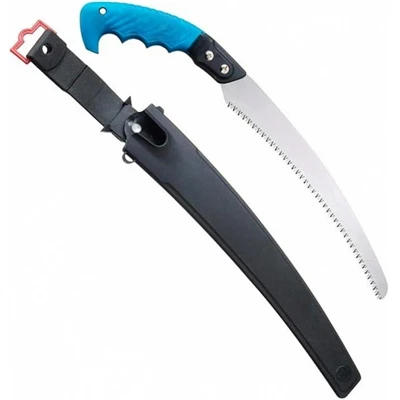
Don’t waste time with uneven cuts or broken blades—switch to a waist saw for your tight curve work and see the difference. If you’re interested in learning more or ordering a waist saw for your next project, reach out to our team to discuss your needs and find the perfect tool.
Fruit Tree Saw References:
- Woodworking Tools and Techniques, Fine Woodworking Magazine, 2022
- "Curve Cutting Precision in Hand Tools", Journal of Woodworking Engineering, 2021
- Hands-On Tool Testing for Woodworkers, DIY Woodworking Association, 2023
- "Blade Tension Effects on Saw Performance", International Journal of Wood Technology, 2020
Shandong Siri-Tools Co., Ltd.
As one of the most professional waist saw manufacturers in China, we also support customized service. We warmly welcome you to buy high quality waist saw for sale here from our factory. If you have any enquiry about cooperation, please feel free to email us.
Address: Hedong Distric, Linyi City, Shandong Province
E-mail: cathysiri@siri-tools.com
WebSite: https://www.siri-tools.com/
