Hey everyone, thanks for swinging by my little corner of the blog—if you’re here, you’ve probably got questions about abrasive pads, and especially whether they work on metal. I’m [Your Name], and I’ve been an abrasive pads supplier for over 12 years now, so I’ve seen pretty much every scenario where folks reach for these things, from DIYers tackling a rusty bike frame to industrial guys prepping steel for a weld. Let’s cut to the chase first: yes, abrasive pads absolutely work on metal—but it’s not as simple as grabbing any old pad and going to town. There’s a science to it, and I’ve messed up more than a few jobs over the years early on, so I’m gonna share what actually holds up. Abrasive Pads
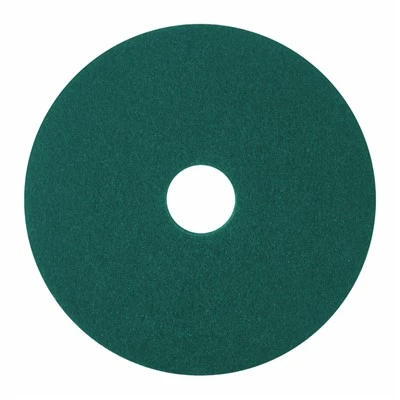
First off, let’s get the basics out of the way. Abrasive pads are those flexible, usually round or rectangular pads coated with abrasive grit, right? Unlike rigid sandpaper discs that go on angle grinders, these are softer, more conformable—they bend to fit curves, edges, even little crevices that solid abrasives can’t reach. But the key here is that the grit on them isn’t the same for every material. When it comes to metal, you can’t just use a generic aluminum oxide pad on, say, stainless steel or cast iron. Wait, let’s break down the types of abrasive grit first, because that’s the make-or-break.
Aluminum oxide is the workhorse for most metals—mild steel, carbon steel, even aluminum. It’s tough, it fractures slowly so it keeps cutting sharp longer, and it’s affordable. I’ve had DIY customers come in all the time asking for “the cheap metal pads,” and aluminum oxide is exactly what we point ’em to. But here’s a thing: if you use aluminum oxide on stainless steel, it can leave tiny embedded particles in the metal, which leads to rust later on. That’s a big no-no for things like food-grade equipment or marine parts. For stainless steel, we sell zirconia alumina or ceramic abrasive pads. Zirconia is harder, more heat-resistant, and less likely to stick, while ceramic is even more durable for heavy-duty jobs like weld grinding on thick steel.
Then there’s cast iron. That stuff is porous and brittle, so you need a pad that cuts aggressively but doesn’t tear apart the metal surface. I recommend our silicon carbide abrasive pads for cast iron—they’re sharp, break down faster to clear away the cast iron’s flaky edges, and don’t load up (that’s the industry term for when the pad gets clogged with metal shavings) as easily as other abrasives. Speaking of loading, that’s another big reason people think abrasive pads don’t work on metal, but it’s usually because they’re using the wrong pad. If a pad loads up, it stops cutting, instead it just smears the metal around, which ruins the finish.
Wait, let’s talk about how you use the pads too, because even the best pad is useless if you apply it wrong. A lot of new guys think more pressure equals faster results, but on metal? That’s a mistake. Abrasive pads are flexible, so too much pressure just compresses the pad, and the grit can’t do its job. You wanna use light, consistent pressure—let the pad’s flexibility do the work, not your strength. For flat surfaces, a random orbital sander is perfect, because it moves in tiny circles, so you don’t get swirl marks. For curved stuff, like a pipe or a car bumper, a hand-held abrasive pad (we sell those flexible hook-and-loop pads that stick to a pad holder) works way better than a grinder because it conforms to the shape.
I once had a customer who came to me super frustrated—he’d tried using our standard aluminum oxide pads on a stainless steel boat railing, and it left rust spots all over. Turned out, he didn’t know about the embedded particles, and he was pressing way too hard. We swapped him to our zirconia pads, gave him a quick demo on how to hold the sander, and he sent me a pic a week later showing a perfectly polished railing with zero rust issues. That’s the stuff that makes this job worth it—solving those “wait, why isn’t this working?” problems.
Now, what about common uses for abrasive pads on metal? Let’s list the ones we get asked about most: first, rust removal. If you’ve got a small rust spot on a lawnmower deck or a bike chain, a 120-grit aluminum oxide pad will strip the rust right off without scratching the underlying metal too bad. Then there’s surface prep for painting or powder coating. Before you spray a new coat on a steel fence, you need to remove old paint, mill scale (that flaky stuff on new steel), and any oils. Abrasive pads are great here because they leave a “key” surface—tiny scratches that make the new paint stick way better than smooth metal.
Weld grinding is another big one. After you weld two pieces of steel, the weld bead is rough and uneven, and sometimes it has slag (that crumbly, glassy stuff left over from welding). Our 80-grit zirconia pads are perfect for smoothing that weld without gouging the base metal. We sell a lot of these to small fabrication shops that do custom railings and metal furniture—they love that the pad fits around the weld’s curves way better than a grinding disc.
Wait, but what about when abrasive pads aren’t the best choice? Let’s be real, I don’t wanna sell you something that’ll make your job harder. If you’re working on thick, heavy steel that needs to be removed quickly—like a big chunk of excess weld on a structural beam—an angle grinder with a grinding wheel is faster. Abrasive pads are better for precision, light to medium duty jobs, and finishing. Also, if you need a super smooth finish, you’ll go up in grit—220, 320, even 600-grit wet abrasive pads for metal polishing after grinding. Wet pads work great because the water cools the metal, prevents loading, and gives a mirror-like finish without burning the metal (another thing that happens if you press too hard and generate too much heat).
Let’s get into some misconceptions I hear all the time. First, “abrasive pads leave too much scratch pattern for metal.” No, not if you pick the right grit and use the right tool. For a smooth finish, use a random orbital sander with a fine-grit pad, and go with the grain of the metal (wait, metal has a grain? Yeah, especially in sheet metal—if you sand against the grain, you get visible lines that are hard to buff out). Second, “all abrasive pads are the same for metal.” Nope—cheap pads from the dollar store might work for wood, but they’ll load up and wear out in 5 minutes on metal. Our pads use closed-coat grit, meaning every single grain is coated with a resin that sticks it to the pad, so it lasts way longer and doesn’t shed grit onto your metal. Third, “you can use the same pad on metal and other materials.” If you use a metal abrasive pad on wood, you’ll scratch the furniture so bad it’s not fixable. Same thing the other way around—wood pads won’t cut metal. So always match the pad to the material, that’s rule #1.
I should also mention maintenance for the pads, because even a great pad will go bad if you don’t take care of it. When you’re working on metal, you get metal shavings embedded in the pad, and if you don’t clean it out between uses, it’ll start loading faster. We sell a pad cleaning brush—just run it over the pad after every job to clear out the debris. Also, store the pads in a dry place; if they get damp, the resin breaks down, and the grit falls off. I’ve had customers bring back pads that were stored in their garage, got rained on, and they couldn’t figure out why they weren’t cutting—simple fix, just keep ’em dry.
Now, let’s talk about a recent project I saw that blew my mind. A local artist was making a metal sculpture out of old steel pipes, and he wanted a rustic, brushed finish. He tried grinding discs, but they left too aggressive a scratch, and then he saw our ceramic abrasive pads online. He ordered a pack of 120-grit and a hook-and-loop pad holder, and he told me later it took him half the time he thought it would, and the finish was exactly what he wanted—smooth but with a subtle texture, no swirl marks, no rust spots. That’s the sweet spot for abrasive pads on metal: they give you control, which is hard to get with bigger, heavier tools.
Wait, should I touch on safety? Yeah, can’t skip that. When you’re using abrasive pads on metal, you’re generating metal dust, which is bad for your lungs, and if you’re doing wet sanding, there’s standing water, so slip hazards. Wear a dust mask, safety glasses, and closed-toe shoes. For heavy duty jobs, work gloves too—metal shavings are sharp, and the pad can get hot if you’re using it for a long time. I’ve had a couple of burns early on because I didn’t wear gloves, so trust me, it’s not worth it.
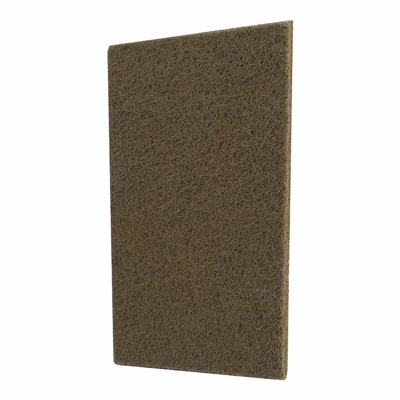
So wrapping this up: yes, abrasive pads are totally usable on metal—you just need to pick the right pad for your metal type, use the right pressure, and match the grit to your job. Whether you’re a DIYer fixing your car, a small business owner doing fabrication, or an artist working on a new piece, there’s an abrasive pad for every metal job.
Floor Pads If you’ve got questions about which pad works best for your specific project, or you want bulk pricing for your shop, hit me up. I’m always happy to walk you through what’s worked for other folks, no sales pitch—just real advice from someone who’s been in this game for years. No fancy links, just shoot me a message to connect, and we can figure out what you need.
References
- machiningdesign.com. (2022). "Abrasives for Metal Finishing: Grit Types and Application Tips."
- Industrial Abrasives Association. (2021). "Best Practices for Using Flexible Abrasive Pads on Ferrous and Non-Ferrous Metals."
- Modern Machine Shop. (2023). "Common Mistakes in Abrasive Grinding and Blending for Metal Components."
Guangzhou YION New Material Technology Co., Ltd.
As one of the most professional abrasive pads manufacturers and suppliers in China, we offer a wide range of products with superior quality. Please feel free to buy customized abrasive pads made in China here from our factory. Also, quotation is available.
Address: Room 110, Building 2, No.2 Jinhuan Street, Nansha District, Guangzhou City, Guangdong Province, China.
E-mail: info@yiontech.cn
WebSite: https://www.yionpads.com/
