If you’ve ever stood beside a large industrial turbine, a centrifugal pump, or a gas compressor—machines that hum like living things even when they’re running at full tilt—you’ve stood near the exact place where labyrinth seals do their quiet, critical work. As a supplier of these seals, I get asked one question more than any other: How does air actually get into a labyrinth seal? It’s not a simple “leak” the way a hole in a tire lets air escape. To answer it, I had to dig into the physics that make these seals work, and also learn how our customers—design engineers, plant maintenance teams, even small engine builders—tend to picture them wrong at first. Labyrinth Seals
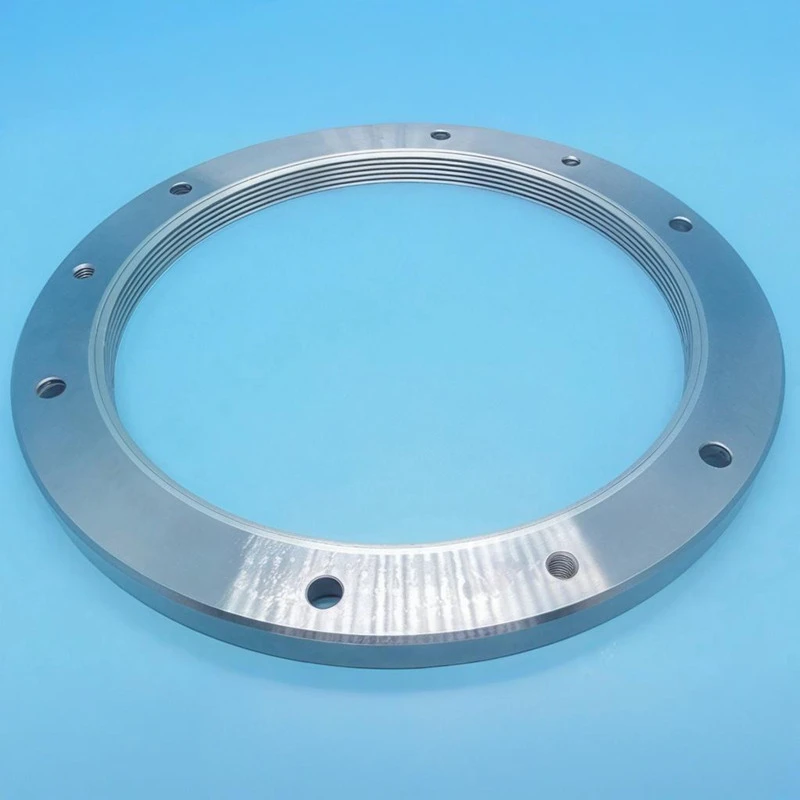
Let’s start with what a labyrinth seal is, for anyone who’s never seen one (I’ve got a drawer full of old test samples back at my warehouse that I can pull out for anyone who stops by). It’s not a soft, flexible gasket like the ones you find on a car’s oil pan. It’s a precision-machined ring of alternating ridges and grooves, nested between two parts: one fixed to the machine casing, the other spinning on the shaft. The ridges are sharp, narrow lands, just a few thousandths of an inch away from the surface of the shaft. The grooves are the spaces between those lands, deep enough to trap air or gas and disrupt its flow.
So if the seal is designed to block air (or stop process gas from escaping, or keep dust out of a cleanroom compressor), why would air get in? The answer isn’t “the seal has a hole.” It’s a combination of three forces: pressure differentials, viscous drag, and something called entrainment, plus a little bit of what I call “circumferential wind.” Let’s break each down, because this is where it gets interesting, and where our customers often need to adjust their seal design to get air flow just right.
First, pressure differentials. Most people think air flows from high pressure to low pressure, which is true—when you open a window on a windy day, air rushes out or in depending on which side has higher pressure. In a machine with a labyrinth seal, that’s the same rule, but the seal’s geometry fights it. Let’s say you have a centrifugal pump handling a volatile process gas, and you want to keep ambient air from seeping into the casing, where it could mix with the gas and cause an explosion. The inside of the pump is at a slightly lower pressure than the atmosphere, so air is always trying to move inward. But the labyrinth seal’s ridges create a series of small pressure drops as air tries to squeeze past them. Each ridge adds resistance, like a turnstile that only lets one molecule pass at a time. For example, a standard 5-ridge labyrinth seal might have a total pressure drop of, say, 12 psi—meaning the air’s path from the outside (atmospheric pressure, 14.7 psi) to the inside of the pump (13 psi) has to fight through five separate pressure steps. If the seal is too short, or the ridges are too shallow, the pressure drops don’t add up, and air can sneak through in bulk. But if the seal is properly sized, the pressure differential is exactly balanced by the seal’s flow resistance, so net inward air flow is almost zero. That’s the sweet spot we’re always chasing.
Second, viscous drag. This is where the spinning shaft changes everything. Imagine a thin layer of air right next to the shaft’s surface—it doesn’t move relative to the shaft, right? That’s the no-slip condition, a basic rule of fluid dynamics. The next layer out moves a little slower, and the next slower still, until you get to the stationary part of the seal, where air is completely still. In a labyrinth seal, that means there’s a thin boundary layer of air that’s being dragged around the seal’s circumference by the spinning shaft. That’s the circumferential wind I mentioned earlier. This wind isn’t just swirling around uselessly—it actually transports air inward, parallel to the shaft, right into the gaps between the seal’s ridges. The deeper grooves in the seal trap this moving air, and turn it into small eddies that dissipate the wind’s energy, slowing the inward flow. If the shaft is spinning faster (think a jet engine’s turbine, which turns at 15,000 RPM), the circumferential wind is stronger, so you need deeper grooves or more ridges to slow that eddy flow. If you get that wrong, the wind can carry enough air past the seal to disrupt the machine’s operation. I’ve had a customer call us in a panic once—their new compressor kept drawing in too much ambient air, even though their old seal worked fine. It turned out they’d upgraded the compressor’s motor, making the shaft spin 30% faster; we just modified the groove depth on their new seal, and the problem was gone in an afternoon.
Third, entrainment. This is a trickier one, and it’s why labyrinth seals aren’t just passive barriers—they have to work with the machine’s internal components. Entrainment happens when small, high-velocity jets of fluid (in this case, air) being blown around the machine’s internal parts pick up smaller air molecules and carry them inward. For example, a turbine’s impeller blades spin at high speed, and they blow air outward, away from the shaft. But the labyrinth seal is right next to those blades, and the outward flow from the blades can create a low-pressure zone right at the seal’s inner edge. That low pressure pulls air from the outside of the seal inward, and the blades’ fast-moving air jet picks up those outer air molecules, entraining them and carrying them past the seal’s ridges. Entrainment is why a seal that works in a low-speed pump might fail in a high-speed turbine—you can’t just copy-paste a seal design; you have to account for the adjacent components’ flow patterns. We did a project last year for a wind turbine manufacturer; their existing seals were letting in enough ambient air to contaminate the lubricant, leading to bearing failures every six months. We added a small “taper” to the seal’s inner surface, angling it slightly toward the shaft, which deflected the entrained air away from the inner edge of the seal. After that, their bearing life jumped to four years—they’ve been repeat customers ever since.
Now, it’s important to clarify one thing: air entering a labyrinth seal isn’t always a problem. Sometimes you want it. For example, in a cleanroom process pump, you might want a small, controlled amount of filtered air to flow inward, to keep dust or contaminants from seeping into the pump’s internal parts. The trick is balancing the flow—you don’t want too much air, because that can reduce the pump’s efficiency, but you need enough to seal out contamination. As a supplier, we don’t just sell you a standard seal and send you on your way. We work with your engineering team to run flow simulations, account for your shaft speed, your pressure differential, your machine’s operating temperature, even the ambient air quality where your machine is installed. For a pump in a dusty steel mill, we’ll add extra ridges and a deep, wide groove to trap abrasive particles before they can get past the seal. For a jet engine component, we’ll use a high-temperature alloy that can handle 1,800°F, because the seal has to work in extreme heat that would warp a standard steel seal.
I’ve spent 12 years in this business, and the biggest mistake I see people make is thinking a labyrinth seal is a one-size-fits-all part. Ten years ago, a customer came to me with a problem: their food processing compressor was blowing out too much air, and letting in bacteria from the plant’s atmosphere. They’d ordered a cheap generic seal off the internet, and it was just a simple ring with two shallow ridges. We tested it in our lab, and found that the generic seal only had a flow resistance that was 40% of what we needed. We designed a custom seal with six deep, precision-machined ridges, tested it under the same conditions, and the inward air flow dropped to almost zero. They’ve used our seals on every new compressor they install now, and they tell us it’s cut their product contamination incidents by 90%.
If you’re reading this, and you’re dealing with air (or gas, or dust, or contaminants) moving through a labyrinth seal, I get it—this stuff can feel like black magic at first. The good news is you don’t have to figure it out alone. We have a team of engineers who can walk you through the physics, run simulations, or even test samples in our in-house flow lab to make sure your seal is working exactly as it should. Whether you’re a plant maintenance manager troubleshooting a persistent leak, a design engineer working on a new machine, or a small business owner looking to improve your equipment’s reliability, we can help you get the air flow right.
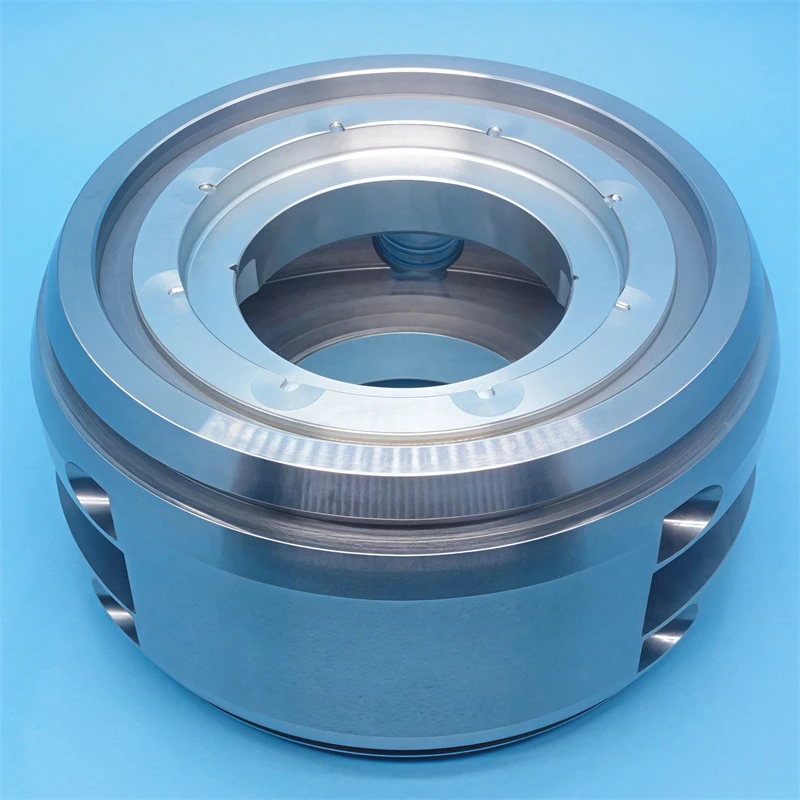
When it comes to labyrinth seals, the question isn’t just “how does air enter?” It’s “how do we control that entry to keep your machine running smoothly, efficiently, and safely?” That’s the work we do, day in and day out. So if you’re dealing with seal-related issues, or you’re ready to spec a new seal for your next project, reach out to our team to discuss your needs. We’ll provide a tailored solution, no generic one-size-fits-all parts, just the precision, performance, and reliability you can count on for the long haul.
Labyrinth Seals References:
- Bae, J. H., & Kim, K. Y. (2018). Fluid Flow Analysis of Labyrinth Seals for Turbomachinery. Journal of Tribology, 140(3), 031702.
- Schlichting, H., & Gersten, K. (2016). Boundary Layer Theory (9th ed.). Springer.
- Childs, D. W. (1993). Turbomachinery Rotordynamics: Phenomena, Modeling, and Analysis. John Wiley & Sons.
- ISO 14644-1:2015. Cleanrooms and Associated Controlled Environments — Part 1: Classification of Air Cleanliness by Particulate Contamination.
Wenzhou Zhengbang Bearing Co., Ltd.
We are one of the most professional labyrinth seals manufacturers and suppliers in China. With abundant experience, we warmly welcome you to buy customized labyrinth seals at competitive price from our factory. If you have any enquiry about free sample, please feel free to email us.
Address: Units 1-1 and 3-1, Building 12, Yongxing Nanyuan Small and Micro Enterprise Startup Park, Binhai 2nd Road, Yongxing Subdistrict, Longwan District, Wenzhou City, Zhejiang Province.
E-mail: zbbearing@zbbearing.com
WebSite: https://www.zb-bearings.com/
