Hey there, let’s cut right to the chase—if you’re knee-deep in home renovation, scrolling through tools online, and stuck on whether a 115mm angle grinder is actually worth picking up, I get it. As someone who’s spent the last few years selling these little workhorses (I won’t bore you with the company name, but trust me, I’m on the front lines talking to weekend warriors and handymen alike every single day), this is the question I get more than any other: Is a 115mm angle grinder suitable for home renovation? Let’s break this down, no fancy jargon, no sales fluff, just real stuff I’ve seen, heard, and even used myself on my own bathroom reno last year. 115mm Angle Grinder

First off, let’s get the basics straight—115mm refers to the diameter of the grinding disc, right? Most people don’t know that, so that’s a quick win. The bigger the disc, the more heavy-duty the tool usually is, but the smaller 115mm is perfect for home jobs, not full-on construction sites. Wait, let’s test that: Think about the average home renovation project. You’re not tearing down a whole house (well, maybe some of you are, but that’s extreme). You’re probably doing things like cutting old tile backer board, smoothing down those rough tile edges after you lay them, stripping paint off a metal fire grate that’s been rusting since the 90s, or even cutting a 2×4 that’s a little too long for that new closet shelf. That’s exactly what a 115mm is built for. I’ve had a customer come in last month asking for a grinder to cut through some old cast iron pipe under their kitchen sink that wouldn’t budge with a hacksaw—115mm did it in 2 minutes, no yelling, no broken hacksaw blades. The big 230mm ones are overkill here—you’d be hauling around something twice as heavy for no reason, and you’d probably nick the pipe you wanted to keep while you’re at it.
Now, let’s talk about home-specific pain points. One of the biggest headaches for homeowners is limited space. My buddy did his garage reno last winter, and he was working in a spot where the door was only 2 feet wide—any grinder with a bigger disc would’ve hit the doorframe before he even started. The 115mm is compact enough to fit in tight corners, under cabinets, around those weird little nooks in a bathroom that you didn’t know existed until you were tiling it. I remember my own bathroom: I was replacing the old vanity, and the plumbing pipes sticking out of the wall were a mess, covered in old putty. I tried a wire wheel attachment on a random old grinder I had lying around, but it was too big, kept scraping the drywall. Switched to my 115mm, and it took 10 minutes to clean all that putty off without touching the wall. Game changer.
But wait, let’s be real—no tool is perfect. A 115mm isn’t going to do everything. If you’re planning on cutting 4-inch thick concrete footings for a new patio, yeah, you’ll want a bigger disc. But that’s not home renovation—that’s small commercial work, or a full-blown house addition. For the stuff 90% of homeowners actually do: tile work, metal stripping, small cuts in wood or masonry, grinding down sharp edges, removing rust from tools or outdoor furniture, it’s spot on. I had a retiree come in last spring, he was refurbishing his old garden bench made of cast iron—used a 115mm with a wire wheel to strip all the old paint, then a grinding disc to smooth out the rust pits, and he finished it all in a weekend. Said he would’ve never touched the big grinder I tried to sell him (I didn’t push, obviously) because it would’ve been too much to haul out of his garage.
Safety is another big one, and I know every home renovation blog yells about it, so let’s keep it real. A smaller disc means less blade surface, which can be safer for a homeowner who’s maybe not a professional. It’s lighter—most 115mm grinders are under 2kg, so you don’t get that arm ache after 10 minutes of use. I’ve seen people using big grinders and shaking so bad after cutting 3 tiles that they had to take a break for an hour. With 115mm, you can work for 20-30 minutes straight no problem, as long as you’re wearing your goggles and a mask (seriously, don’t skip the mask—all that tile dust is garbage for your lungs). Also, the guards on 115mm grinders are sized right for home use—they cover the disc enough to stop flying sparks and debris, but not so much that you can’t see what you’re cutting. I once had a customer who skipped the guard, nicked his finger while cutting a piece of rebar. The guard is there for a reason, even with a smaller disc.
Wait, let’s get into some of the attachments, because that’s where the 115mm really shines for home jobs. You can swap out the disc for so many things: diamond blades for tile, wire wheels for stripping, flap discs for smoothing, even cut-off wheels for thin metal. I used a flap disc on my kitchen countertop edges when I had them quartz installed—smoothed out the sharp factory edges so I didn’t cut my hand every time I passed by. No hand file could do that in 5 minutes like the flap disc on the 115mm did. Another customer was tiling his bathroom, and he used a diamond blade (made for 115mm) to cut the tile around the drain hole—perfect fit, no messy chipping, which is the worst part of tiling. If he’d used a bigger disc, that hole would’ve been all jagged and he would’ve had to buy extra tile.
Now, let’s address the “but is it durable?” question, because homeowners worry about breaking tools after one use. I sell a lot of these, and I hear the horror stories: “I bought a cheap grinder from the hardware store, it died after cutting 10 tiles.” But a good quality 115mm? These things are built to last for years of home use. You don’t need a pro-grade one (those are way more expensive) but you also don’t want the $20 no-name one that feels like it’s gonna fall apart in your hand. I recommend the mid-range ones for homeowners—they’re light, powerful enough for all home jobs, and won’t cost you an arm and a leg. The pros use bigger ones because they’re doing 8 hour days, but for a homeowner doing a few projects a year, 115mm is more than enough. I’ve had a customer who’s had his 115mm for 7 years, uses it for small jobs around his house and his dad’s, and it’s still going strong. That’s the kind of value you don’t get from a bigger tool you only use once or twice.
Wait, let’s talk about a specific project that’s super common: replacing old windows. You have to cut out the old caulk around the window frame, grind down any protruding nails or studs, maybe even trim a little bit of wood to make the new window fit. I used my 115mm for exactly that last year when I replaced my basement window. The old caulk was super hard, wouldn’t come off with a putty knife. Swapped in a wire wheel, went over it for a few minutes, and it all peeled right off. No damage to the wood, no scraping for an hour. That’s the kind of time save you want when you’re trying to finish a project before the weekend is over.
Is there a time when a 115mm isn’t right? Yeah, like I mentioned earlier, if you’re doing major concrete work, like cutting a concrete slab for a new shed, that’s when you need a bigger disc. Or if you’re a professional doing full-time construction, you might want something more heavy-duty. But 99% of home renovation falls into the “small to medium projects” category, and 115mm is perfect for that. I always tell customers: If your project is something you can finish in a weekend, if you’re working in tight spaces, if you don’t want to haul around a 5kg monster, 115mm is your guy.
Let’s also talk about cost, because that’s a big factor for homeowners. A 115mm angle grinder is way cheaper than a bigger model. You can pick up a good one for under $100, which is nothing compared to other power tools you buy for reno (circular saws, drills, nail guns are all in that same ballpark). And the attachments—discs, wheels, blades—are way cheaper for 115mm than they are for bigger discs. So when you wear one out, you’re not spending $20 on a replacement, it’s more like $5. That adds up over time, especially if you use it a few times a year.
Wait, I should mention one thing that a lot of people don’t know: 115mm grinders are also great for outdoor home stuff, not just indoors. I used mine to grind down the rust on my old patio furniture before I repainted it. Took the rough edges off the metal, so the paint went on smooth, and saved me hours of sanding by hand. A bigger grinder would’ve been too awkward to hold while I was kneeling on the patio, and would’ve sent sparks flying all over the grass (though you still need to be careful with sparks, even with 115mm—don’t do it near dry leaves or anything flammable).
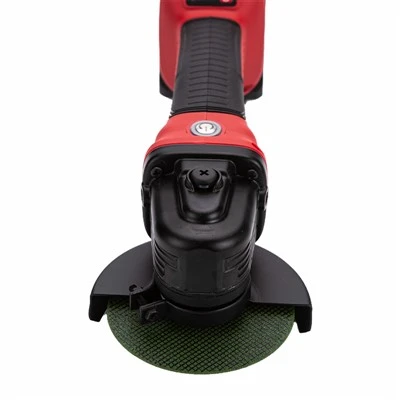
Now, let’s get back to the original question: Is a 115mm angle grinder suitable for home renovation? From everything I’ve seen, everything I’ve used, everything my customers have told me—yes, absolutely. It’s compact, lightweight, perfect for tight spaces, cheap, versatile for all the small jobs that make up most home reno, and safe enough for someone who’s not a pro. The only time it’s not the right choice is when you’re taking on full-on construction work that needs more power. For the rest of us, tearing out old tile, fixing a fence, cleaning up a pipe, smoothing an edge—115mm is the tool you didn’t know you needed until you have it.
Electrical Angle Grinder If you’re looking to pick one up, don’t overthink it. Skip the giant ones, skip the super cheap no-names, grab a solid mid-range 115mm and a few extra attachments. I can hook you up with all the details, answer any questions you have about which ones work best for specific home jobs, and help you get the right setup for your project. Just reach out to talk through what you need, no pressure, no sales pitch—just real advice for real home reno.
References
- DIY Network. (2022). "Angle Grinder Basics for Homeowners." Home Improvement Guide.
- Occupational Safety and Health Administration (OSHA). (2021). "Power Tool Safety: Angle Grinder Best Practices." U.S. Department of Labor.
- Consumer Reports. (2023). "Best Angle Grinders for Home Use." Product Review & Buying Guide.
Zhejiang Cheering Sewing Machine Co., Ltd.
With abundant experience, we are one of the most professional 115mm angle grinder manufacturers and suppliers in China. Please feel free to wholesale advanced 115mm angle grinder for sale here from our factory. We also accept customized orders.
Address: No.69 Heping Road, Lishui, Zhejiang, China
E-mail: gxjlq@126.com
WebSite: https://www.cheering-machinery.com/
