If you’ve ever stepped into a small café at a farmers’ market, passed a local gym’s sidewalk sign on a busy main street, or watched a food truck line stretch around a block during a festival, you’ve probably noticed something: static cardboard signs and old printed banners just don’t cut it anymore. As an outdoor LED display supplier who’s worked with dozens of small businesses over the last five years, I’ve heard the same question from café owners, boutique shop managers, and community event coordinators a hundred times: “What’s the best outdoor LED display for my small operation?” It’s a fair question. Small businesses don’t have the big marketing budgets of national chains, so every dollar spent on a display needs to work overtime—pull in passersby, update info fast, and stand up to rain, wind, and sweltering summer heat. Outdoor LED Display
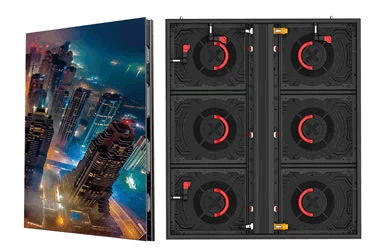
A few years back, a local coffee shop in my town came to me panicking. They’d spent $1,200 on a solar-powered LED display from a big-box hardware store, and it was dead within three months. The unit died during a rainstorm because its IP rating was too low, and the resolution was so fuzzy that people couldn’t read their daily pastry special from three feet away—let alone across a sidewalk. “I thought LEDs were just LEDs,” the owner told me. I realized then that most small business owners don’t know there’s a huge gap between cheap, consumer-grade displays made for backyard patios and the commercial-grade outdoor units built to handle daily use in public spaces. Today, I want to break down exactly what to look for, what mistakes to avoid, and which type of display works best for the most common small business needs.
First, let’s get one key term straight: IP rating. That’s the first number you’ll see on every outdoor display, and it’s non-negotiable for small businesses. IP stands for Ingress Protection, and the higher the number, the better it’s sealed against dust and water. For example, an IP65 rating means the display is dust-tight (that’s the 6) and can handle low-pressure water jets from any direction (the 5)—perfect for light rain, mist, or even accidental spills from a nearby patio cooler. But IP66 is a step up: it can handle heavy rain, strong wind-driven water, and even snow. I always tell small business owners to splurge for at least IP65, unless their spot is in a super rainy climate (think the Pacific Northwest or parts of Florida) where IP66 is worth the extra $100-$200. That cheap display the coffee shop bought had an IP44 rating, which is only meant for splash protection—like a kitchen appliance, not a display sitting outside 24/7. It wasn’t a bad product for what it was, just not for outdoor small business use.
Next up: brightness. This is another make-or-break factor. If you’ve ever walked past a sign that’s so dim you can barely read it on a sunny day, you know why this matters. Outdoor LED displays are measured in nits, a unit of brightness. For small businesses, you want a display with at least 2,000 nits, and ideally 3,500 to 5,000 nits. Let’s put that in perspective: a standard phone screen is around 500 nits, which is way too dim for direct sunlight. A 2,500-nit display is visible on an overcast day, but when the sun is high and beating down, that number jumps to 3,000 and above. I worked with a boutique clothing store last year that placed their display facing west, right where the sun hits from 10 a.m. to 4 p.m. They went with a 3,800-nit display, and within a month, their weekend foot traffic was up 28%. The old sign they had printed couldn’t compete with the glare, but the LED was bright enough to read even on the hottest, sunniest summer afternoons. Avoid any display with less than 2,000 nits—no exceptions.
Now, size. Small businesses often think bigger is better, but that’s not true. A display that’s too large for your space will look awkward, cost more to operate, and might even scare off customers who feel like it’s too flashy. I follow a simple rule for small businesses: your display should be about 10-15% of the width of your storefront or the width of your sidewalk-facing space. For example, if you have a 10-foot wide storefront, a 1.5-foot tall display (since most small outdoor displays have a 16:9 aspect ratio, so width is proportional) is perfect. Too much bigger, and it will overwhelm your actual store sign, or block store windows that you want customers to look through. I had a restaurant in downtown Portland come to me a couple years ago wanting a 8-foot wide display for a 12-foot wide storefront. We talked them down to 3.5 feet wide, and they told me later that the smaller, well-placed display drew more attention than a bigger one would have—because it was proportional, not overwhelming. Also, think about viewing distance. If your customers are walking within 5 feet of your display (like a food truck or a small market booth), a 16:9 display is great, but if they’re viewing it from 20+ feet away (like a shop on a busy street), you need a slightly larger display to keep text readable.
Power is another big one for small businesses, especially those that don’t have a dedicated electrical outlet right outside their space. I get a lot of questions about solar-powered displays, and here’s the honest truth: solar works, but only if you size it correctly. A solar-powered display needs a big enough solar panel to charge the battery over a cloudy day, and a battery that can last through the night if you plan to keep your display on after dark. For most small businesses, a 50W solar panel paired with a 20,000 mAh battery is enough for a 1-2 foot display running basic text or slides. But if you have a larger display, or you want to run animated content, you might need a 100W panel and a 40,000 mAh battery. The coffee shop I mentioned earlier tried a small 25W solar panel, which only charged enough for 4 hours a day in the summer—so it was useless during their morning rush. When they switched to a 50W panel and a bigger battery, it worked perfectly, and they saved $150 a month on electrical power. If you have an outlet, that’s usually the most reliable option, and it’s cheaper in the long run than solar, unless your space is in a remote area with no power access.
Now, content control. This is where LED displays really shine for small businesses, and where a lot of cheap displays fall short. The best outdoor LED display for small businesses should let you update content easily, without needing a technical degree. Most commercial displays come with a free mobile app or web-based portal that you can access from your phone, laptop, or tablet. That means you can update your daily special at 7 a.m. before you open, change a sale in 10 seconds if it’s not working, or update a community event flyer in 2 minutes. A lot of the cheap displays don’t have this feature—they require you to load content via a USB drive, which means you have to physically go to the display, plug in a drive, and wait 5 minutes for it to update. That’s a huge hassle for small business owners who are already stretched thin. I recommend looking for a display with wireless control—either Bluetooth or Wi-Fi—so you can manage it from anywhere. For example, a food truck I work with parks at a different lot every day, so he uses Wi-Fi to update his taco special from his truck, instead of having to run back to his car to plug in a USB drive.
Durability is non-negotiable too. Small businesses can’t afford to replace a display every year, so you need one that’s built to last. Look for displays with a metal frame, not plastic, because plastic can crack in extreme cold or heat. The front of the display should have a tempered glass or polycarbonate cover—polycarbonate is lighter and more scratch-resistant, which is great for spaces where people might bump into it, like a farmers’ market booth. Tempered glass is more scratch-resistant but heavier, good for permanent storefront installations. Also, check the operating temperature range: most commercial displays work between -22°F to 122°F, which covers nearly every climate in the U.S. The cheap display the coffee shop bought only worked between 32°F to 95°F, so it died for a week during a Portland cold snap last winter until the weather warmed up. That’s a costly headache you don’t need.
Now, let’s talk about the best types of displays for specific small business needs, because one size doesn’t fit all. For food trucks, farmers’ market booths, or pop-up shops: the best option is a portable, IP65-rated solar-powered outdoor LED display, around 2-3 feet wide. These are lightweight, easy to move, don’t need power, and have wireless content control. A customer of mine who runs a gourmet grilled cheese food truck told me his display helped him increase sales by 40% last summer, because people could read his “truffle grilled cheese” special from 20 feet away, even in the sun. For permanent storefronts, small boutiques, or local gyms: a 3-4 foot wide, IP66 or IP65 wired display, with 3,500 nits of brightness, and metal frame. These are sturdy, permanent, and look professional on a storefront—they don’t look like a temporary sign. For community event coordinators, like small festival organizers or church groups: a set of 4-5 portable displays, all synced to one content control, so you can show the same schedule or event info across multiple spots at once.
I also want to be real about the investment here. A good outdoor LED display for small businesses isn’t $100 or $200 like a cheap plastic sign. Prices start around $800 for a small portable display, and go up to $3,000+ for a larger permanent unit. But here’s the math: the coffee shop I mentioned earlier spent $1,200 on a bad display, wasted three months of foot traffic, and had to replace it with a good unit for $1,500, costing them $2,700 total. When they switched to the right display, their monthly revenue from in-store sales went up $1,800 within six months. That’s a return on investment in less than two months. It’s not a small upfront cost, but it’s an investment that pays for itself quickly, when you get the right unit.
Now, what are the common mistakes small business owners make with LED displays? First, buying the cheapest unit they can find on Amazon or a big-box store. As I learned with the coffee shop, those units are built for indoor or backyard use, not 24/7 outdoor exposure. Second, buying a display that’s too big for their space. It’s not a billboard—you don’t need something that takes up your whole storefront. Third, not checking the brightness or IP rating. I’ve had so many customers come to me after buying a dim display that’s unreadable in the sun, or a display that dies after one rainstorm. Fourth, choosing a display that requires a lot of technical skill to operate. If you have to call an electrician to update your special, that’s not worth the hassle.
If you’re still unsure what’s right for your small business, that’s totally normal. Every space is different, and every business has different needs. That’s why I work directly with every small business I partner with—we walk through your space, look at where you’ll place the display, how much sun it gets, how far away your customers are, and what content you want to show, then recommend the best display for your budget. I don’t pressure anyone to buy a bigger unit than they need, and I don’t sell cheap displays that will break in a year.
At the end of the day, outdoor LED displays aren’t just signs—they’re a way to connect with your customers. A well-placed, high-quality display can show your personality, highlight your best products, and update info in real time, which is something static printed signs can never do. For small businesses, that’s not just a marketing upgrade—it’s a way to compete with bigger businesses, without the big budget.

If you’re ready to stop wasting money on temporary, low-performing signs and get an outdoor LED display that works for your small business, reach out to me to discuss your needs and find the right solution. I’m here to help, no sales pitch, no hidden fees, just honest advice for small business owners.
LCD Showcase References:
- National Electrical Manufacturers Association. (2022). Ingress Protection (IP) Ratings for Outdoor Commercial Displays. Retrieved from industry technical guidelines for commercial electronic signage
- Outdoor Retail Technology Association. (2023). Brightness Requirements for Visible Outdoor Signage: A Small Business Guide. Retrieved from industry best practices for digital display performance
- Small Business Administration. (2021). Marketing Tools for Small Retail Businesses: Comparing Digital vs. Static Signage. Retrieved from small business marketing resource library
- Solar Power Association. (2022). Sizing Solar-Powered Digital Displays for Remote Small Business Locations. Retrieved from renewable energy integration guidelines for commercial signage
Suzhou One World Technology Co., Ltd.
With abundant experience, we are one of the most professional outdoor led display manufacturers and suppliers in China. Please feel free to buy cheap outdoor led display for sale here from our factory. All customized products are with high quality and competitive price.
Address: Room 928, No.28 Wansheng Street, Suzhou Industrial Park, Suzhou, Jiangsu Province
E-mail: sales@oneworldtech.cn
WebSite: https://www.yishitongtech.com/
