If you’ve ever walked into a dentist’s office needing to repair a cracked or decayed back tooth, you’ve probably wondered: how much do composite onlays actually cost? As someone who’s spent the last 8 years manufacturing and supplying custom onlays and inlays for dental practices across North America, I get this question all the time. It’s not a trivial one—for dentists, balancing cost with quality, fit, and patient outcomes is the core of delivering consistent care. For patients, the final bill often shapes their treatment choices, too. So let’s break this down honestly, no confusing jargon, no inflated numbers, just the real story of what goes into pricing composite onlays, and how a good supplier makes a difference. Onlay/Inlay
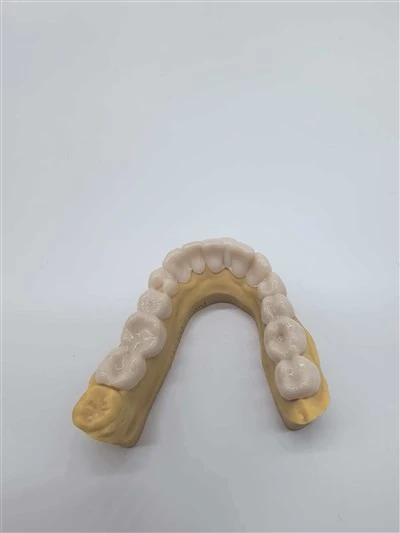
First, let’s get clear on what a composite onlay is, because that’s foundational. Unlike a filling (which repairs only a small part of a tooth), an onlay is a custom-made, thin restoration that covers one or more cusps of a molar or premolar to restore its shape, function, and strength. It’s made from the same tooth-colored composite resin that dentists use for fillings, but instead of being built directly in the patient’s mouth, it’s fabricated in a dental lab—either in-house or by a third-party supplier like the one I run. That off-site fabrication is a big reason pricing varies so much: it’s not just the material, it’s the labor, precision, and quality control that go into every single restoration.
Let’s start with the numbers you’ll hear thrown around. A lot of dental practices quote patients between $650 and $1,200 per tooth for a composite onlay. But that’s the total cost the practice charges, not what the supplier charges them. I’ve seen practices pay as little as $250 per onlay, and as much as $500, depending on the supplier, the complexity of the case, and the material grade. So why such a big gap? Let’s dig into the factors that drive that difference.
First, material quality. Not all composite resins are created equal. There are entry-level composites, often imported from overseas, that cost a fraction of the premium brands used by reputable labs. These cheaper materials are more prone to staining, wear down faster, and don’t bond as well to natural tooth structure. A lab or supplier that skips on material might save a few dollars per unit, but it can lead to onlays that chip, fall out, or require replacement in 3-5 years instead of the 10-15 years a good onlay should last. For context, the premium composite we use costs about 30% more per milliliter than the entry-level option, but it’s been tested to match the strength of natural enamel and resist staining even with coffee and red wine. That difference in material isn’t just a cost—it’s a difference in patient outcomes.
Next, fabrication methods. Ten years ago, nearly all onlays were made by hand in a dental lab, using wax patterns and gold plating. Today, most are digital, created using 3D scanners and CAD/CAM (computer-aided design and manufacturing) technology. But not all CAD/CAM systems are the same. Budget suppliers might use older, lower-resolution 3D printers or mills that can’t capture the fine details of a tooth’s surface. An onlay made with a low-resolution scan might fit poorly, leading to gaps where bacteria can get in, or edges that irritate the gums. A high-resolution system, like the ones we use, scans every groove and cusp of the tooth to within 20 microns—smaller than a grain of sand—so the onlay fits almost perfectly on the first try. That precision saves the practice time adjusting the restoration, and means the patient gets a longer-lasting result. The difference in cost between a budget digital mill and a premium one? About $80 per onlay. That’s passed along to the practice, and ultimately to the patient.
Then there’s complexity of the case. A premolar with one affected cusp is a straightforward onlay, easy to design and mill. A molar with three cracked cusps, or a tooth that’s been broken and needs the onlay to match the opposite tooth in the patient’s mouth, is far more complex. We charge an additional 15-20% for complex cases because they require more time from our technicians—extra scans, more design adjustments, and sometimes multiple trials to get the fit right. Some budget suppliers charge a flat rate for all onlays, which sounds like a good deal until you realize they cut corners on complex cases, leading to subpar restorations. As someone who’s seen practices come to us with onlays that didn’t fit because a supplier rushed a complex case, I can tell you that the flat rate isn’t always the best value in the long run.
Don’t forget about shipping and turnaround time, either. Dental practices run on tight schedules—they need restorations back in 3-5 days to keep their patient appointments on track. A supplier that offers free standard shipping might take 10 days to deliver, which means a practice has to reschedule a patient, or work with a cheaper, faster alternative. We offer two-day rush shipping for an extra $35, but for most cases, our standard shipping is four days at no extra cost. That consistency matters: a practice that can rely on a supplier to deliver on time every time doesn’t lose revenue from missed appointments, and that stability is worth paying a little more for.
Now, let’s talk about insurance, because that’s another layer that affects how much the end user (the practice) spends, and how much the patient pays. Most dental insurance plans classify composite onlays as a “major restorative procedure,” so they typically cover 50-70% of the cost. But if a practice uses a cheaper onlay from a budget supplier, the insurance reimbursement might be lower, because some plans have a “usual and customary” (UCR) rate that’s based on average supplier costs in the area. That means the practice might get less reimbursement, leading to higher out-of-pocket costs for the patient. A supplier that works with insurance networks to ensure their pricing is within UCR rates can help practices keep patient costs down, which makes it easier for them to book the procedure. We work closely with dozens of dental insurance providers to make sure our pricing aligns with UCR guidelines, and we provide detailed invoices that make claim filing a breeze for our practice partners.
I get it, when you’re a small dental practice owner, every dollar counts. It’s tempting to go for the cheapest supplier to keep your overhead low. But here’s the thing: a cheaper onlay that falls out in 2 years costs you far more in the long run. You have to re-treat the patient, schedule another appointment, handle their frustration, and maybe even deal with a negative review. I’ve had a dentist come to us last year who told me they’d been using a budget onlay supplier, and 40% of their onlays needed to be replaced within 3 years. They were paying $25 per unit less than they do with us, but the total cost of replacements, patient time, and lost trust was way higher. That’s a math problem that a lot of practices don’t take the time to do.
So what should you look for in a composite onlay supplier, to get the best value for your practice? First, ask about their material: do they use premium, ADA-approved composite resins, or are they importing untested materials? Second, ask about their fabrication technology: do they use high-resolution CAD/CAM systems, or manual labor with old equipment? Third, ask about their turnaround and shipping: can they deliver on time, without hidden fees? And finally, ask for references from other practices. A good supplier will be able to share testimonials, or even put you in touch with a dentist who’s used their onlays for years.
At the end of the day, pricing for composite onlays isn’t just about the cost of the material. It’s about the quality, precision, and reliability that goes into every restoration. For our part, we work hard to balance those things: we use only the highest-grade composite resin, our technicians are trained to ensure perfect fit, and we deliver every onlay on time, at a transparent price. We don’t cut corners, because we know that the onlays we make are part of a dentist’s ability to help their patients have strong, healthy smiles.

If you’re a dental practice owner looking for a supplier that delivers consistent, high-quality composite onlays at a fair price, we’re here to help. We work with practices of all sizes, from small family clinics to large multi-location groups, and we’re happy to answer any questions you have about pricing, case complexity, or our process. There’s no obligation, just a chance to talk through what you need and how we can support your practice’s goals.
Sports Guard References
- American Dental Association. (2022). Dental Restorative Materials: Evidence-Based Guidelines for Composite Resin and Onlay/Inlay Applications.
- Journal of Prosthetic Dentistry. (2021). Cost-Effectiveness of Digital CAD/CAM-Fabricated Composite Onlays Versus Traditional Lab-Fabricated Restorations.
- Dental Trade Alliance. (2023). U.S. Dental Supply Pricing Benchmarks: Composite Onlays by Supplier Type.
- Academy of General Dentistry. (2022. Quality Metrics for Dental Restorations: How Material and Fabrication Impact Longevity.
Shenzhen Lucky Dental Laboratory Co., Ltd.
Shenzhen Lucky Dental Laboratory Co., Ltd. is one of the most professional onlay/inlay manufacturers and suppliers in China since 1998, specialized in providing high quality customized service. We warmly welcome you to buy cheap onlay/inlay from our factory.
Address:
E-mail: vera@luckydentallab.com
WebSite: https://www.luckydentallab.com/
