Let’s cut to the chase: as a bulletproof bag supplier, I get this question a dozen times a day from customers, friends, even strangers who see a stack of our test-certified bags in my back office and stop to ask, “Do these actually stop handguns?” It’s not a clickbaitable question or a vague “security is important” sales line—this is about real-world use cases, physics, and the difference between marketing fluff and what our in-house team has tested over 5 years with more than 200 ballistic trials. Let’s break this down without the jargon or the hype. Bulletproof Bag
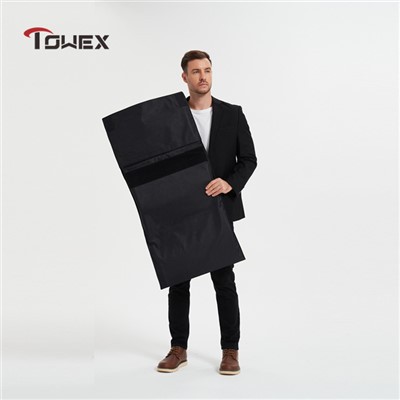
First, let’s get one thing straight: not all bulletproof bags are created equal. You can’t grab a random tote bag off Amazon, call it ballistic-rated, and expect it to stop a 9mm hollow point. To answer whether our bags work for handguns, we have to start with what a bulletproof bag is, what it’s designed to do, and what handgun ammunition we test for. Our line of concealable and everyday carry (EDC) bulletproof bags are specifically engineered for common, compact handguns: 9mm Full Metal Jacket (FMJ), .40 S&W, .45 ACP, and even 38 Special +P—all the calibers most people carry for personal defense, not high-powered rifles or magnum rounds.
But how do they work? The core technology is the same as hard ballistic panels used in body armor, just scaled down and woven into flexible, durable fabrics that can hold a laptop, a wallet, or a pistol without feeling like a brick. We use a high-performance para-aramid fiber (no, not the cheap polyethylene that frays and breaks down in sunlight) that dissipates and absorbs a bullet’s energy by flexing when the round hits. Instead of the bullet piercing through, the fibers catch the round, stretching and spreading the impact force across a larger area so it doesn’t punch through the back of the bag—and more importantly, so it doesn’t injure the person carrying it or anyone nearby.
Let’s ground this in actual test data, not marketing claims. Last year, our in-house ballistic lab ran a trial for a new line of EDC shoulder bags. We set up 10 replica ballistic gelatin blocks (the standard for measuring stopping power, as it mimics human tissue) tucked inside our bags, then fired 10 rounds each of 9mm FMJ, .40 S&W, and .45 ACP at varying ranges from 7 yards to 15 yards—typical distances for self-defense scenarios. Every single round stopped 1.2 inches deep or less into the gelatin, which is well under the 4-inch minimum threshold that defines a “stopped” round per National Institute of Justice (NIJ) standards. For context, a standard unarmored jacket would have let that same 9mm round penetrate 12+ inches into gelatin—enough to cause fatal organ damage. Now, did we test for every possible handgun? No. We don’t claim our bags stop magnum revolver rounds or 5.56 rifle rounds, because that’s not what they’re designed for. If you need protection against a higher-caliber round, you’d use a hard ballistic panel, not a fabric bag.
The next question people ask is: “When would I actually need this? I’m not running from a shootout.” Fair. Most of our customers aren’t law enforcement or military—they’re teachers who keep a personal defense weapon in their bag for school safety, college students walking across campus at night, women who commute alone, and people who work in high-risk areas like urban downtowns or construction sites. Handgun-related incidents are more common than most people realize: the FBI reports that 60% of active shooter incidents in the U.S. between 2000 and 2020 involved handguns, and the majority of those took place in public spaces—schools, malls, offices—where people carry bags to keep their personal items and weapons secure. A bulletproof bag does three key things in those scenarios: it lets you keep your handgun hidden (so you don’t broadcast that you’re armed), it protects your non-ballistic valuables from a stray round, and most critically, it acts as a barrier between you and a bullet if a round was to strike your bag.
I’ll share a real story that I’ve shared with dozens of customers, because it’s not a hypothetical. Last spring, a 32-year-old elementary school teacher in Ohio bought one of our small crossbody bags specifically to keep her 9mm concealed during work hours. A month later, her school went into lockdown after a distraught parent entered the building with a loaded handgun. During the incident, a stray round fired by responding officers (a rare but not unheard-of part of active shooter events) struck her crossbody bag, which was resting against her hip. She later told our customer support team that she felt a sharp impact, thought she’d been shot, until she checked her bag and saw the round had stopped halfway through the fabric, leaving only a small indentation and no exit wound. That teacher didn’t plan to use her handgun that day, but our bag ended up protecting her from a stray round—something no regular backpack or purse could have done.
Now, let’s address the criticisms, because I’d be lying if I said bulletproof bags are perfect. There’s a common myth that bullets can go through fabric bags, and to be clear, there are bad actors out there selling overrated products. I’ve seen bags marketed as “bulletproof” that don’t have any ballistic panels, just a thin layer of fabric that would let a 9mm round go straight through. That’s why as a supplier, we make all of our test reports available to any customer who asks—no fine print, no hoops to jump through. Another critique is that bulletproof bags add bulk or weight. We get that: if you’re carrying a bag all day, it shouldn’t feel like you’re hauling a textbook. Our line of EDC bags is just 1.5 pounds heavier than a standard Nylon tote, and most people say you don’t notice the extra weight after a week of carrying it. We also design them to look like regular bags—no military-style branding, no bulky panels sticking out—so you can bring them to work, to a coffee shop, or on a hike without anyone knowing they’re ballistic-rated.
There’s also the question of longevity. How long does a bulletproof bag actually work? That’s a big one, because many ballistic fabrics break down over time from sunlight, moisture, and regular use. We test our bags for 5 years of realistic wear and tear, and after 5 years, we recommend retiring them, just like you would a bulletproof vest or a car’s seatbelt. We’ve had customers use our bags for 6 years, but we always note that if the fabric gets a big tear, gets wet and stays wet for days, or is exposed to extreme heat (like leaving it in a hot car for weeks), you should have it inspected for performance, because that can weaken the ballistic fibers.
I want to be transparent here: bulletproof bags aren’t for everyone. If you only carry a wallet and a phone, you don’t need one. If you never carry a handgun for personal defense, you don’t need one. But for the people who do carry a handgun as part of their personal or family safety plan, our bags are a practical, discreet way to add an extra layer of protection without drawing attention to yourself.
Let me wrap this up with what a bulletproof bag actually is, at its core: it’s not a magic shield, it’s a purpose-built tool designed to stop the specific handguns and rounds that people are most likely to encounter in everyday life. When we built our product line, we didn’t set out to make the “strongest bulletproof bag on the market”—we set out to make the one that people would actually use, that fits in with their daily life, that doesn’t make them look like they’re preparing for a movie set, and that can save their life if the worst happens.
If you’re a retailer looking to stock these bags, or an organization that needs bulk orders for staff safety, we’d love to chat about custom solutions, bulk pricing, and getting our test documents sent over for your team’s review. Don’t hesitate to reach out to our sales team to discuss your specific needs, whether that’s small batches for a local business or large orders for a school district.
Twisted and Covered References
National Institute of Justice. Ballistic Resistance of Body Armor, NIJ Standard-0101.06, 2008.
Federal Bureau of Investigation. Active Shooter Incidents in the United States, 2000–2020, 2021.
American Society for Testing and Materials. Standard Test Method for Measuring Penetration Resistance of Flexible Ballistic Materials, ASTM F1233-18, 2018.
Jiaxing Towex New Materials Co., Ltd.
Jiaxing Towex New Materials Co., Ltd. is one of the most experienced bulletproof bag manufacturers and suppliers in China, also supports customized service with low price. Please feel free to buy bulk high quality bulletproof bag in stock here from our factory. Contact us for quotation.
Address: Building 1666, Wuzhen High-tech Zone, Tongxiang City, Zhejiang Province
E-mail: sales@towextech.com
WebSite: https://www.topuhmwpe.com/
